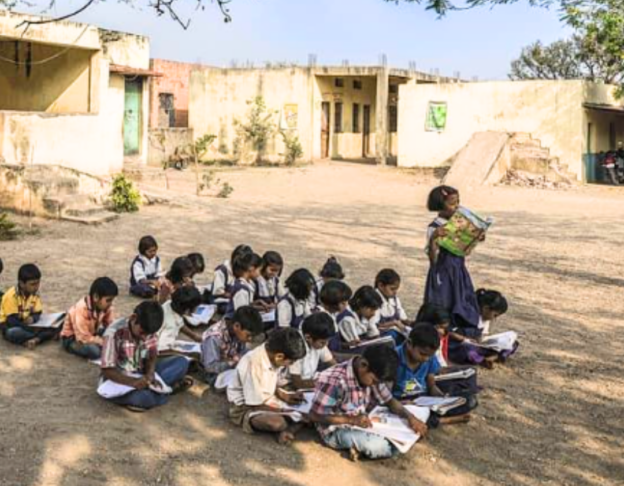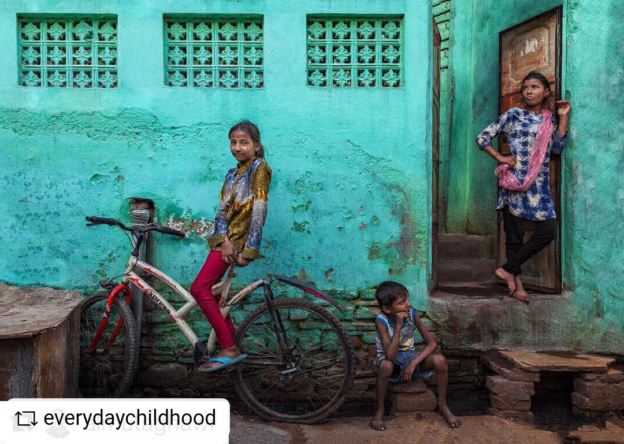
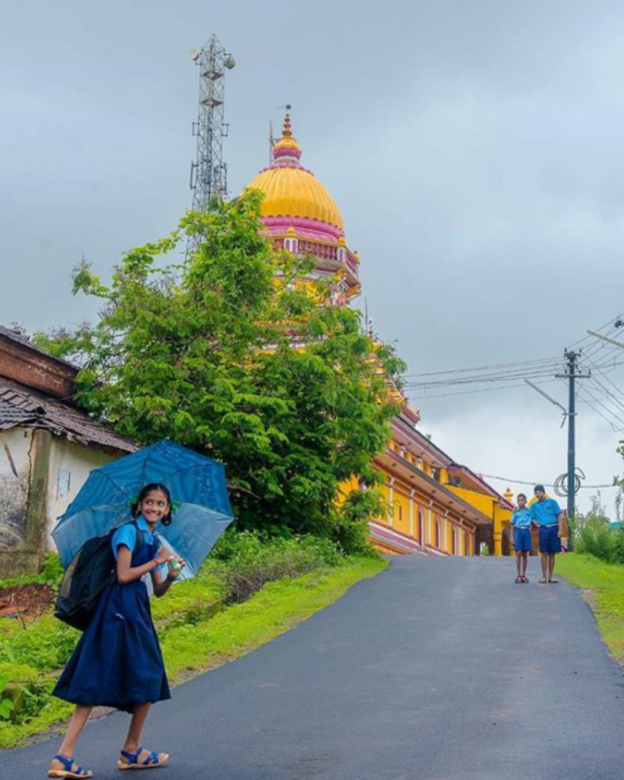
In the villages of Babejury and Barbandh, located under Gudighat Panchayat, a narrow road runs alongside paddy and cotton fields, connecting the community to the market, the high school, and further ahead to Muribahal Block headquarters. Despite being an important route, it remains largely isolated — a bus passes by only twice a day, and few bikes cross it. Children and adults use this road daily, but its solitude has made it unsafe.
By mid-2024, a new fear began to grow among the children. A group of daily wage workers and out-of-school youth started gathering at the road around 11 a.m. and 4 p.m., coinciding with the times when children were going to and from school. They would make comments, creating an atmosphere of fear and discomfort.
As one girl explained: “Humko darr lagta hai… bahut ladke khade rehte hain… comment pass karte hain… uncomfortable bhi lagta hai ki wo aur dusre logon ke saamne aise karte hain. Insulting aur kharab lagta hai.”
Even adults admitted to feeling unsafe while walking that stretch. Some parents, however, were unaware of the extent of the problem. “Parents to dhyan nahi dete… apne kaam mein busy hote hain… shaam ko aate hain. Bacche bhi khul ke nahi bol pate… darr bhi hota hai ki parents ye na bol dein ki theek hai school mat jao,” one child shared. To cope, children began walking in groups, but their fear persisted.
In July 2024, the Children’s Group (CG) raised their concerns during meetings and presented them to the Village Child Protection Committee (VCPC). Although the issue made it to the Gram Sabha, no significant action was taken. The VCPC hesitated, worried that confronting the youth might lead to conflict, as they were more accustomed to addressing infrastructure issues than behavioral ones.
A year later, in July 2025, the children pressed the issue again with the VCPC. At that time, the Panchayat was developing a park about half a kilometer away from the unsafe road. In a joint brainstorming session with the VCPC, Sarpanch, and community elders, a practical idea emerged: move benches from the new park to the isolated road and encourage elders to sit there during the day.
The reasoning was simple: “Jahan buzurg baithe rahenge, wahan badtameezi karne ka dar hoga. Bacche bhi khud ko surakshit mehsoos karenge.”
With leadership from the woman ward member of Babejury and the Sarpanch, benches were installed along the road. Elderly men and women began sitting there regularly. Their presence alone was enough to deter harassment. As one child later said, “Abhi to aise kuch nahi ho raha hai… ladke log khade rehte hain par buzurgon ke saamne galat baat nahi kar pate. Ab insulting mahaul nahi rehta, to achha lagta hai.”
On August 15, 2025, the Panchayat inaugurated the new park, which increased public movement in the surrounding area. Some additional benches were placed along the unsafe road, and discussions are underway to develop that area into a formal bus stop.
These changes have made the road safer for about 8–10 school-going boys and girls, who now walk with greater ease and confidence. While the youth continue to use the area, they do not linger or say anything to the children. Children report being able to use the road even in the evening without fear. Although teachers were not directly engaged, they were informed about the issue later.
This case demonstrates how simple, locally driven solutions can transform unsafe spaces into safe ones for children. It highlights the power of children’s voices in raising concerns and the importance of collaborative brainstorming between the CG, VCPC, Panchayat, and community elders.
While the intervention has provided immediate relief, questions of sustainability remain. How long will elderly members continue sitting there? What if the youths return in greater numbers? Could more lasting measures — such as awareness sessions for youth, better engagement of parents and teachers, or collaboration with formal authorities, ensure the road remains safe in the long term?
For now, this story stands as an example of how children’s concerns, when heard and acted upon, can reshape unsafe spaces into safer environments, one bench at a time. More importantly, it shows that even small, short-term, and locally imagined steps mark progress. The VCPC, though not yet ready to directly confront youth and men on an issue that has long been normalised, did not turn a blind eye. Instead, it chose to work with other stakeholders, think creatively, and act in the best way it could at this stage. This process of listening, reflecting, and ideating on possible solutions signals a VCPC that is slowly finding its ground, building trust in its own capacity, and learning what it means to play a role in child protection