Strengthening existing child protection systems
Enhancing local child protection structures so they respond effectively and consistently to children’s needs.

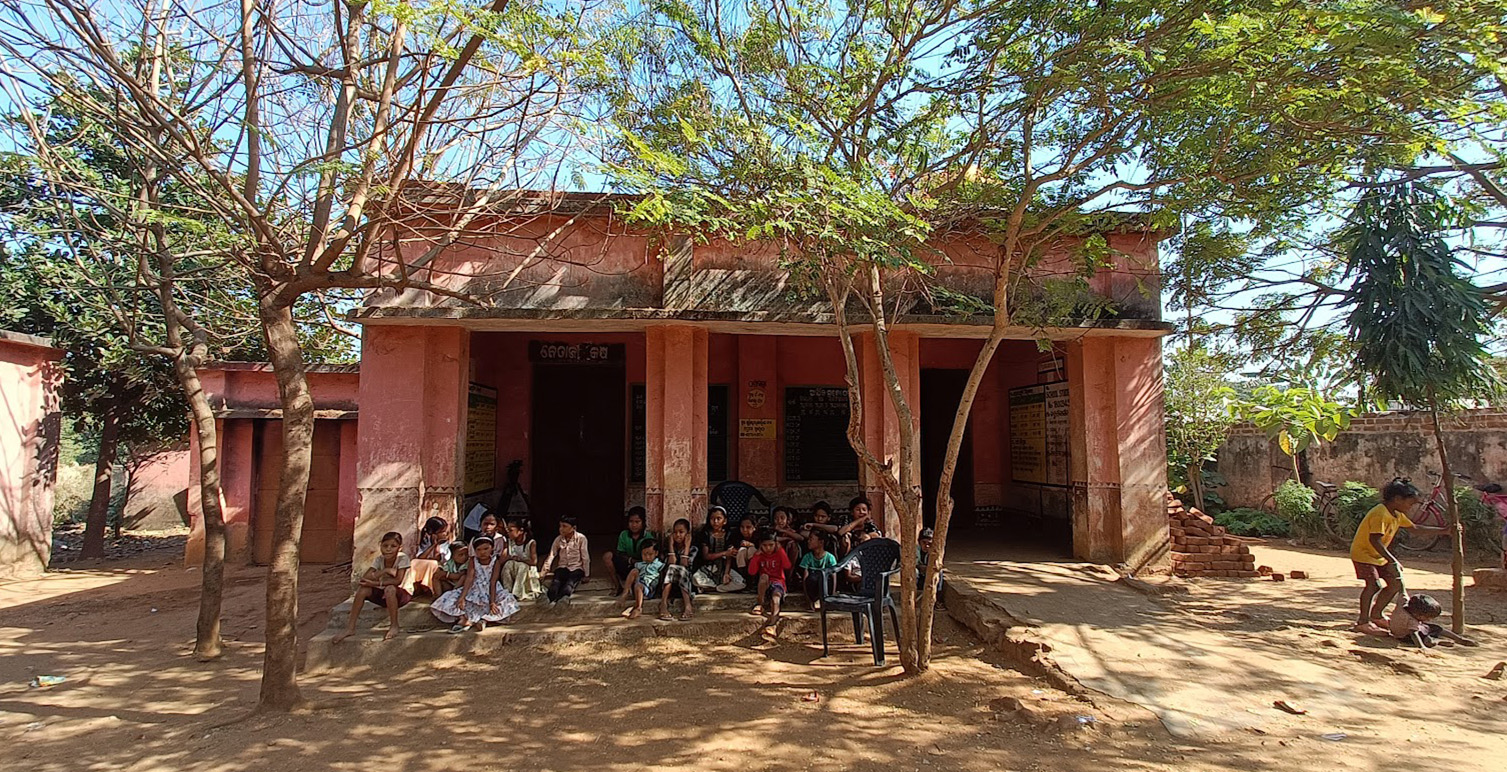
We believe that when families, communities, and governments come together, even the smallest local actions can snowball into lasting changes in attitudes, behaviours, and systems.
Enhancing local child protection structures so they respond effectively and consistently to children’s needs.
Enabling communities to recognise risks and collectively prioritise children’s safety and dignity.
Empowering families and communities to identify concerns early and safeguard children before harm occurs.
Leher is a child rights knowledge and practice organisation committed to ensuring safe and thriving childhoods for all children. Our work has reached 25 districts across nine states, where we have partnered with families, communities, governments, and the funding community, to address the root causes of child vulnerability and create sustainable systems of protection and care.
We focus on building strong local ecosystems that nurture children, enabling small community-led actions to grow into shifts in attitudes, behaviours, and systems. From preventing child marriage and child labour to improving access to education, health, and social protection, Leher strengthens communities to rise collectively for children. We believe that when families, communities, and governments come together, even the smallest local actions can snowball into lasting changes in attitudes, behaviours, and systems.
Our work is supported by partnerships with organisations such as UNICEF, Tata Trusts, Terre des Hommes, State Child Protection Societies, CHILDLINE India Foundation, Miracle Foundation, Paul Hamlyn Foundation, UBS Optimus Foundation, Dasra, and many others.
A world where caring families, alert communities, and responsive governments come together to ensure all children are safe and thriving.
Leher's child protection work spans five states across India — from Madhubani's villages in Bihar, where the journey began in 2014, to communities across Maharashtra, Odisha, and Punjab.

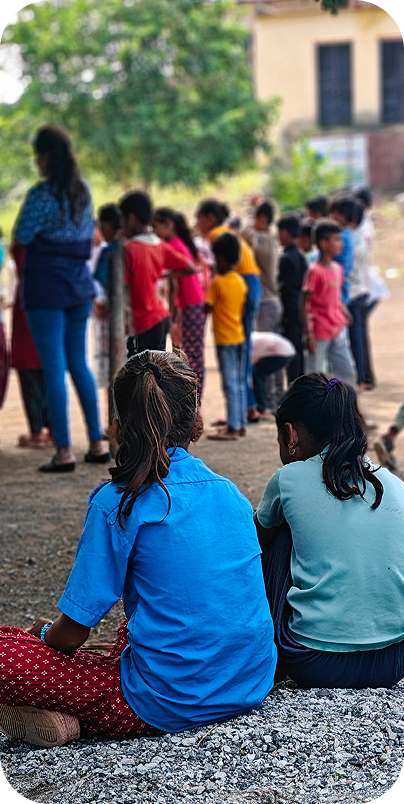
Until a few years ago, India’s child protection system was top-down, focused on post-harm interventions, and accessible only at district headquarters. Families and communities, especially in rural and urban-poor contexts, were left without the tools, knowledge, or confidence to act for their children’s safety.
Leher recognised the missing piece: prevention at the community level. Inspired by the gaps revealed through CHILDLINE 1098’s millions of distress calls, Leher began developing a bottom-up approach that would equip communities to anticipate risks, prevent harm, and build protective ecosystems around children.
This led to the creation of the Bal Suraksha Hub (BSH) model — a way to bring families, children, local leaders, and institutions together in everyday spaces to safeguard children.
The BSHs are the cornerstone of our approach to community-based child protection. They are village- or urban ward-level spaces where families, children, and local stakeholders come together to discuss, plan, and act on issues of child wellbeing and protection.
The idea of BSHs grew out of the urgent need to move beyond crisis-response and post-harm interventions (like helpline interventions) to anticipatory and preventive action at the community level.
India’s child protection system is strong on paper but weak in reach. Most services are concentrated at district headquarters, leaving families in villages and urban settlements far from access. BSHs close this gap by making protection meaningful “in small places, close to home”.
Instead of waiting for top-down interventions, BSHs empower communities to recognise risks, mobilise solutions, and demand accountability from the system.
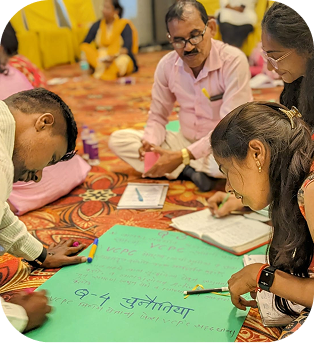
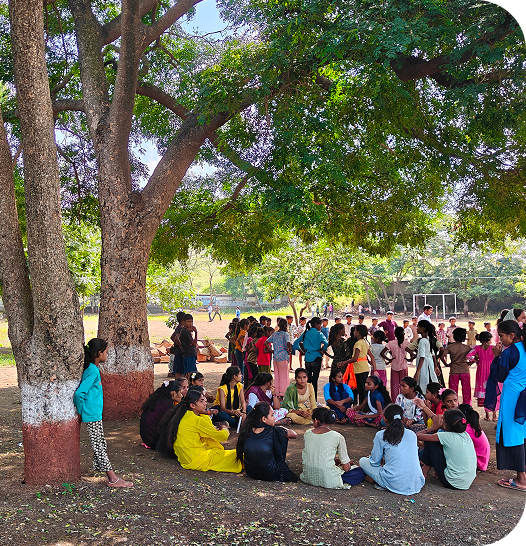
Each Hub is anchored by three interlinked groups:
Platforms mandated by government policy, reimagined to be led by community members themselves. VCPCs support families, respond to cases of harm, monitor children’s needs, and link families to entitlements and services.
Formed with adolescents (11–17 years), these groups build children’s confidence, leadership, and skills. They share inspiring stories of change that motivate other children, families, and community leaders. They raise issues, support peers, and work alongside VCPCs to ensure children’s voices shape community decisions.
Local self-governments are sensitised and supported to integrate children’s concerns into Gram Sabhas and allocate resources for child-related needs routinely, as well as to integrate these into village budgets and planning.
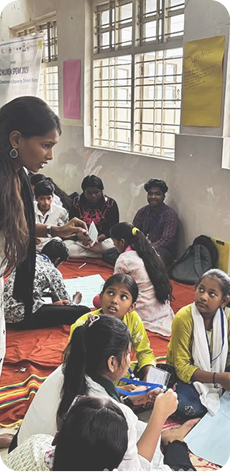
Structured, circular discussions where communities identify problems, plan actions, share responsibility, and follow through collectively.
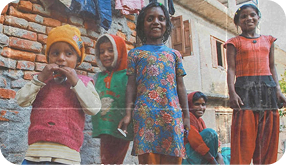
A district-wide baseline study is conducted with government and communities to enable them to understand their children’s realities, gaps in services, and to co-create action plans.
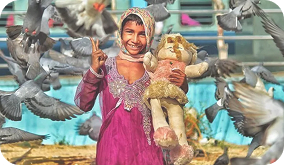
Children are taken through an experiential learning curriculum—covering self, rights, and life skills—to prepare them as active agents of change.
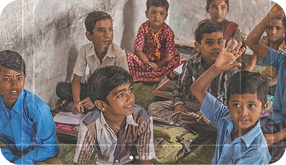
Parents, youth, frontline workers, teachers, SHGs, and elected representatives are trained to act as champions for child rights.
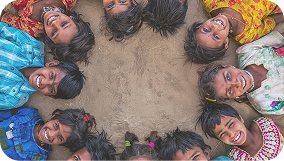
Dialogue and collaboration with panchayats, block, district, and state governments make public systems more responsive, aware, and accountable.
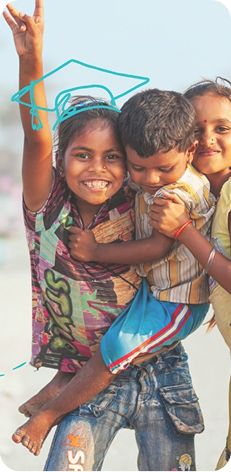
Children’s voices influence parents, leaders, and service providers, shifting community attitudes and norms and changing communities’ social fabric.
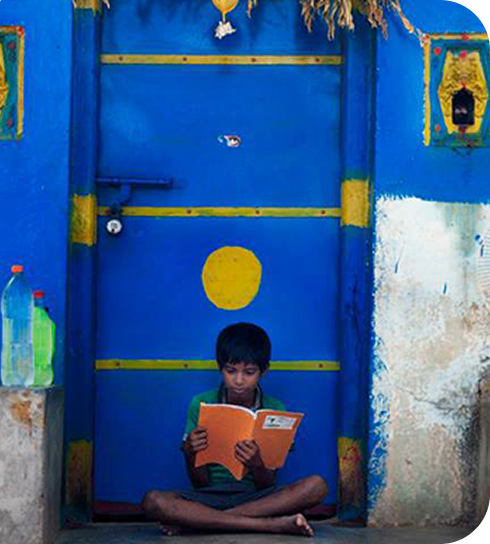

A digital tool under development that enables communities to document issues, track progress, and monitor outcomes in real time.
Multilingual, culturally adapted participatory tools ensure inclusive engagement and ownership by communities.
Online and on-site workshops, peer learning, and MIS-driven monitoring keep field teams and communities connected and supported.
Communities that once waited for external help now act collectively to resolve issues and negotiate with government systems.
From Madhubani, Bihar shows that adolescent girls in children’s groups delayed marriage, pursued education, and inspired families to seek better opportunities.
In the wake of the pandemic, VCPC members contested and won local elections in 28 villages—bringing child rights into political spaces.
Scale Deep – changing mindsets, relationships, and cultural norms around children’s safety.
Scale Out – replicating BSHs across geographies, reaching more communities.
Scale Up – influencing policy, law, and systems so that child protection becomes integral to governance and development.
Families, communities, and governments working together ensure that children are safe, healthy, and happy, supported by a web of care that extends from home to local institutions. Over time, these shifts help break intergenerational cycles of poverty and risk, creating empowered communities where every child can thrive.
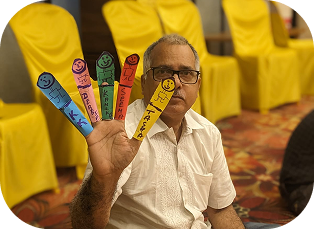
Leher is powered by a dedicated core team and a visionary board of directors who bring together deep experience in child rights, governance, community development, and systems change.
Our core team leads program design, field implementation, research, and partnerships. They work closely with communities to strengthen the Bal Suraksha Hub model, create knowledge resources, and advocate for child protection at local and national levels.
The Leher board provides governance, strategic guidance, and oversight, ensuring that the organisation remains true to its vision of safe and thriving childhoods for all.