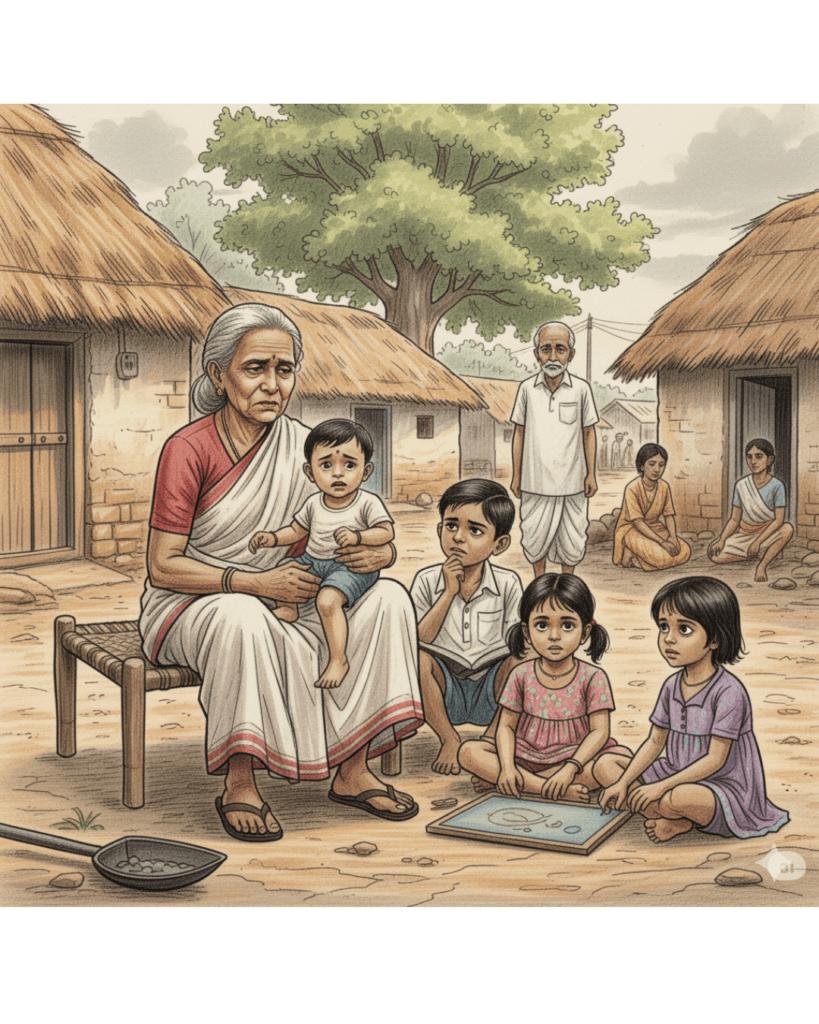
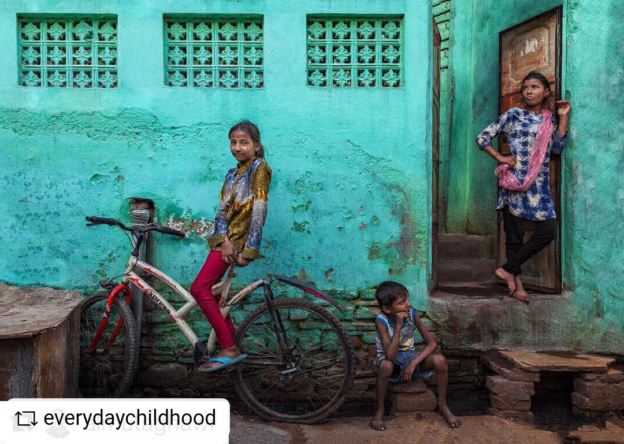
In Balikhamar village, three siblings, Ganga (15, Class 10), Shivani (14, Class 9), and Sanjeev (12, Class 7), faced challenges with irregular schooling. As children of a single parent from a landless family, they lived under significant financial strain. For years, the family migrated seasonally to Hyderabad and Bangalore to work in brick kilns. Each time they returned, the children would re-enrol in school, but economic pressures often forced them into local labour – domestic work, as well as in paddy and cotton fields – limiting their school attendance to only 5 to 10 days a month.
During a community mapping exercise in June 2024, the Children’s Group (CG) identified the siblings as out-of-school children and brought their situation to the attention of the Village Child Protection Committee (VCPC). In response, the VCPC contacted the Block Development Officer (BDO), who coordinated with the Block Social Security Officer (BSSO). By August 2024, the family was connected to ration entitlements. The VCPC verified this through a home visit and encouraged the mother to allow the children to attend school regularly, emphasising that further assistance would depend on the children’s enrollment.
This process required persistence: ward members, the SMC President, and local youth accompanied the VCPC on multiple visits to the BDO’s office. They compiled and submitted essential documentation, including Aadhaar cards, the Sarpanch’s written approval, bank account details, and online applications.
In May 2025, the VCPC again followed up with the BDO, this time applying for housing support under the Indira Awas Yojana. By July 2025, the Harpal family was successfully listed as beneficiaries in the Muribahal block housing survey. The VCPC guided the family through all documentation and application steps.
Gradually, the family’s situation began to stabilize. With access to ration and pension benefits, their reliance on child labor and migration decreased. The VCPC provided continued counseling: “Now that you are receiving these benefits, you are better positioned to send the children to school. If they attend regularly, we can work on securing additional support.” Motivated, the mother chose not to migrate again, citing her age, her desire for consistent pension benefits, and the importance of her children’s education.
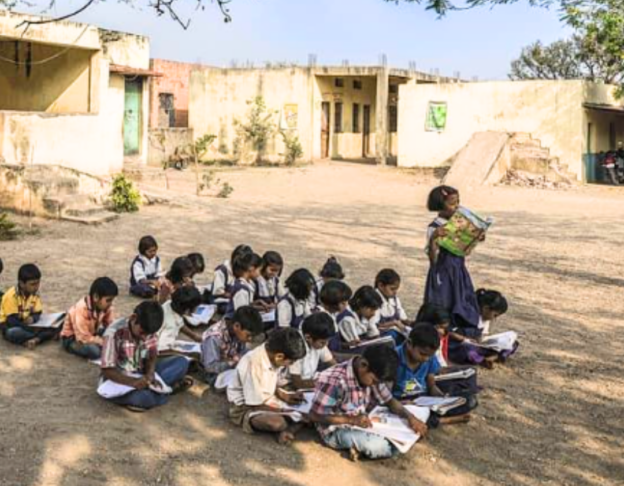
By mid-2025, Ganga, Shivani, and Sanjeev were regularly attending school, supported by midday meals and encouragement from their teachers. The SMC and VCPC members visited the school to request extra attention for the siblings, resulting in noticeable improvements in their attendance and classroom participation. The children also began attending CG meetings from May 2025, which further aided their socialisation and confidence.
Teachers reported that the siblings were now more engaged in school activities. While academic improvement will take time, the shift from irregular to consistent attendance marks a significant change.
This case illustrates how timely access to government schemes, such as ration support, pensions, housing, and midday meals, can address the root causes of irregular schooling. The collaborative efforts of Children’s Groups, VCPCs, and block-level officials reduced the family’s dependence on migration and child labour, enabling the children to consistently return to school.
However, some challenges remain: tracking the children’s academic performance and long-term aspirations is essential, and ensuring the sustainability of these improvements will depend on how the family manages future financial stress. Nonetheless, this intervention has strengthened the confidence of the VCPC to replicate similar efforts for other migrant families; currently, 20 to 25 migrant children are being monitored to help them achieve regular schooling.
The Harpal children’s journey highlights the potential of community-based protection structures to not only identify children in crisis but also mobilise government schemes that provide stability and restore children’s right to education.