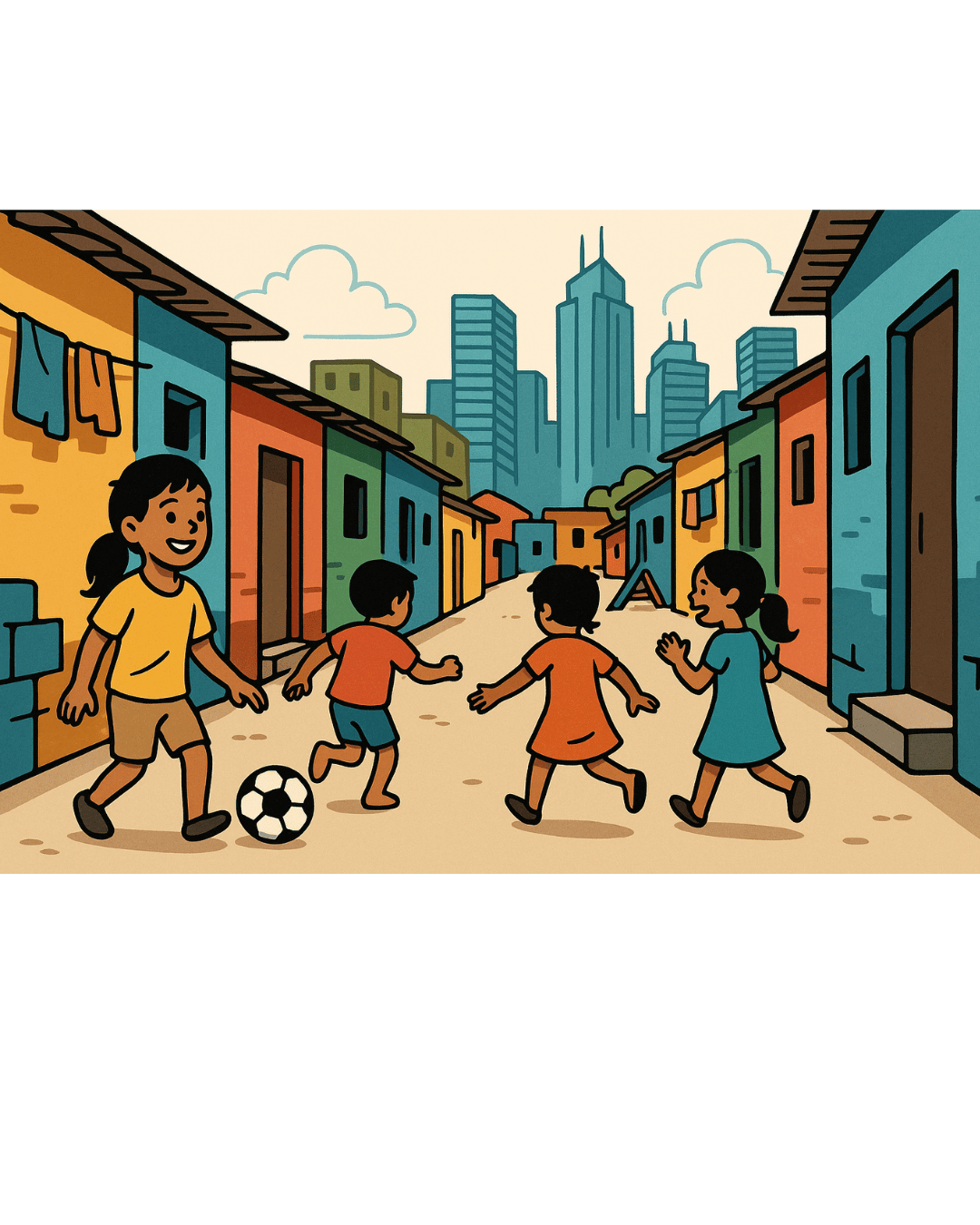
In Bhagatsing Nagar in Mumbai, home to 2,000–3,000 people from different regions of India, life moves quickly. Families make their living through company jobs, domestic work, and daily-wage labor. The neighbourhood is well-equipped with basic amenities—a masjid, a mandir, two hospitals, two ration shops, and three anganwadis. Yet, amidst this urban vibrancy lies a persistent challenge: a nala, or drainage canal, that poses risks to health and safety.
The nala is a dumping ground for garbage, both inside and around designated bins. When BMC (Brihanmumbai Municipal Corporation) workers come to collect the trash, they often demand extra payment to clear the waste scattered near the bins. Over time, this has turned the nala’s surroundings into a dangerous and unhygienic zone. Broken glass, stray dogs, and an overpowering stench have made it a hazard, particularly for children who play nearby or pass the area on their way to school.
During a routine meeting of the Community Protection Committee (CPC), members discussed the nala and its implications. The children’s group (CG) had raised concerns about the area during their discussions with the facilitator. The children shared their firsthand experiences: broken glass from the garbage often ended up near their playground, making it unsafe. Cricket balls frequently landed in the trash, and retrieving them became risky. The smell from the nala was so unbearable that it made walking to school unpleasant, and stray dogs added to their fears.
For the children, the issue wasn’t just about discomfort—it was about safety and health. They wanted change and even suggested joining adults in meetings with local authorities to voice their concerns directly.
The CPC took the children’s concerns seriously and decided to intervene. With guidance from Amruta, they planned a course of action. First, they decided to approach the Nagarsevak (local municipal representative) after the upcoming elections. The facilitator explained the importance of understanding the roles of different municipal workers to streamline their approach. They also planned to confront BMC workers about the additional charges they demanded for cleaning, a service that should already be provided.
Though the problem impacted everyone in the community, collective action had not been initiated until this point. The CPC, working alongside the children, began mobilizing the residents to address the issue together.
As Diwali approached and elections drew near, the BMC conducted a temporary cleanup of the nala. While this provided momentary relief, it was clear that sustainable solutions were needed. The CPC vowed to keep up their efforts, ensuring the nala remained on the agenda of both local leaders and municipal authorities.
The community has come together to create a clear roadmap for addressing the waste management issue. A delegation composed of CPC members, children, and residents plans to meet with the Nagarsevak and senior officials from the BMC to advocate for effective waste management solutions without imposing additional charges.
Notably, the very children who sparked this initiative will participate in the meetings, ensuring their voices are included in the conversation. Additionally, residents will be encouraged to dispose of garbage responsibly, which will help alleviate the burden on local waste management systems.
To ensure accountability, the CPC will actively monitor the BMC's activities, verifying that commitments are followed through and providing regular updates during their meetings. This collaborative approach aims to foster a cleaner, more sustainable environment for the entire community.
This effort is more than just a fight to clean a nala; it’s a testament to the power of collective action. By involving children, listening to their concerns, and fostering collaboration among community members, the CPC has turned a persistent problem into a rallying point for change. The nala, once ignored and overlooked, has become a symbol of what can be achieved when a community comes together for the safety and well-being of its residents.