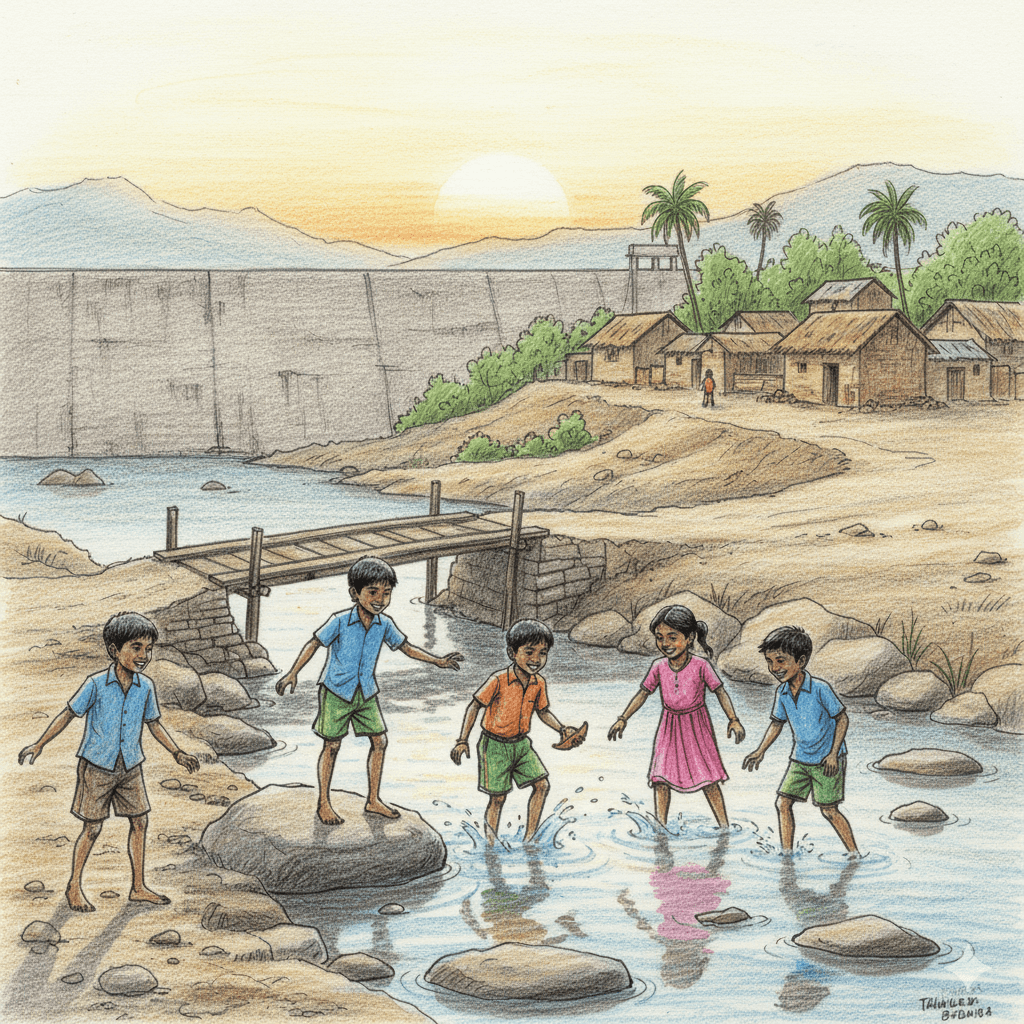
Virchak village, situated in Nandurbar Tehsil, Maharashtra, is home predominantly to the Scheduled Tribe (ST) community, with nearly the entire population belonging to this group. Livelihoods in the village are primarily dependent on agriculture, construction, and seasonal migration to Gujarat for groundnut and cotton processing work.
The village also houses a large dam that supplies water to the wider Nandurbar district. Despite its functional significance, the dam has long been a source of anxiety for the community due to a history of tragic incidents. Around five years ago, four children and two young men drowned near the dam outlet. More recently, a child injured his leg while attempting to swim there.
The loss stayed fresh in people’s memories, yet despite the warnings and grieving, children continued to swim and play there. The community grappled with a dilemma: how could they keep their children safe without simply issuing rules that were routinely ignored?
In April 2024, during a village mapping activity, members of the local Children’s Group (CG) raised the alarm once again. They pointed out that despite past tragedies, children still visited the dam, particularly near the high-risk outlet area. The danger, they said, was real and immediate. A child had recently injured his leg there while swimming. This time, the children didn’t just raise the issue, they demanded change.
At the following Village Child Protection Committee (VCPC) meetings in May and June, CG members repeatedly brought up the dam. The urgency in their voices pushed the community to listen. The Sarpanch, who was present during one of these discussions, took their concern seriously. He advised the VCPC to submit a formal application to the Gram Panchayat to take action.
By August 2024, the VCPC, supported by facilitators and CG members, had drafted and submitted the application. They proposed appointing two guards to monitor the dam area, especially the outlet zone. The proposal was discussed in the Gram Sabha held on August 15, and thanks to the Sarpanch’s involvement and the community's collective memory of loss, it passed without resistance. The guards were appointed the same month, their salaries drawn from MNREGA and Jal Jeevan Mission funds.
The guards were given a clear mandate: keep children away from the danger zone, report repeated violations to the Gram Panchayat, and ensure that parents were informed if their children were found near the site. Community leaders, including the Sarpanch, local police, ASHA workers, schoolteachers, and VCPC members, began visiting the dam regularly to check that the guards were doing their job.
The impact was almost immediate.
Children stopped going near the dam. They started playing in nearby open fields and playgrounds instead. They began discussing safety in their CG meetings and warning their peers not to approach the outlet. Parents became more vigilant, keeping a closer watch on their children’s whereabouts. If anyone was spotted near the dam, villagers reported it to the VCPC straight away.
There was no resistance from the community, because the need was real, and the solution was owned by everyone. The children were the first to raise the concern, and they were the first to change their behaviour. “Earlier, we thought it was just fun,” one child shared during a CG meeting. “Now we know it’s dangerous.”
Since the guards were appointed, not a single drowning or injury has been reported.
The case of Virchak is a powerful example of what happens when children’s voices are heard and adults respond with seriousness and solidarity. It highlights how by allocating funds from MNREGA and the Jal Jeevan Mission for appointing guards, the Panchayat not only acknowledged the urgency of the issue but also demonstrated how children’s safety can be integrated into village development.
The partnership between the CG, VCPC, Gram Panchayat, and wider community has not only prevented further tragedy, it has fostered a culture of safety, accountability, and collective care.
In this small village where tragedy once loomed by the waterside, a simple yet effective intervention has brought peace of mind to parents, protection to children, and pride to an entire community.