In the first part of this series, Aditi explored a personal journey through two very different landscapes—rural Nandurbar and urban Mumbai Suburban—to understand how community-led child protection plays out across contexts. Drawing from those field visits, this follow-up takes a step back from individual experience to examine the broader patterns that emerged in urban communities. What does it mean to work on child protection in dense, diverse, and transient bastis? What happens when the most basic needs—like a place to meet—are uncertain? Grounded in Aditi’s field reflections, this piece highlights the unique challenges that CPC and CG members navigate in Mumbai’s informal settlements, and the quiet resilience with which they continue to act for children’s safety and wellbeing.
You Look for a Place to Meet—and Struggle
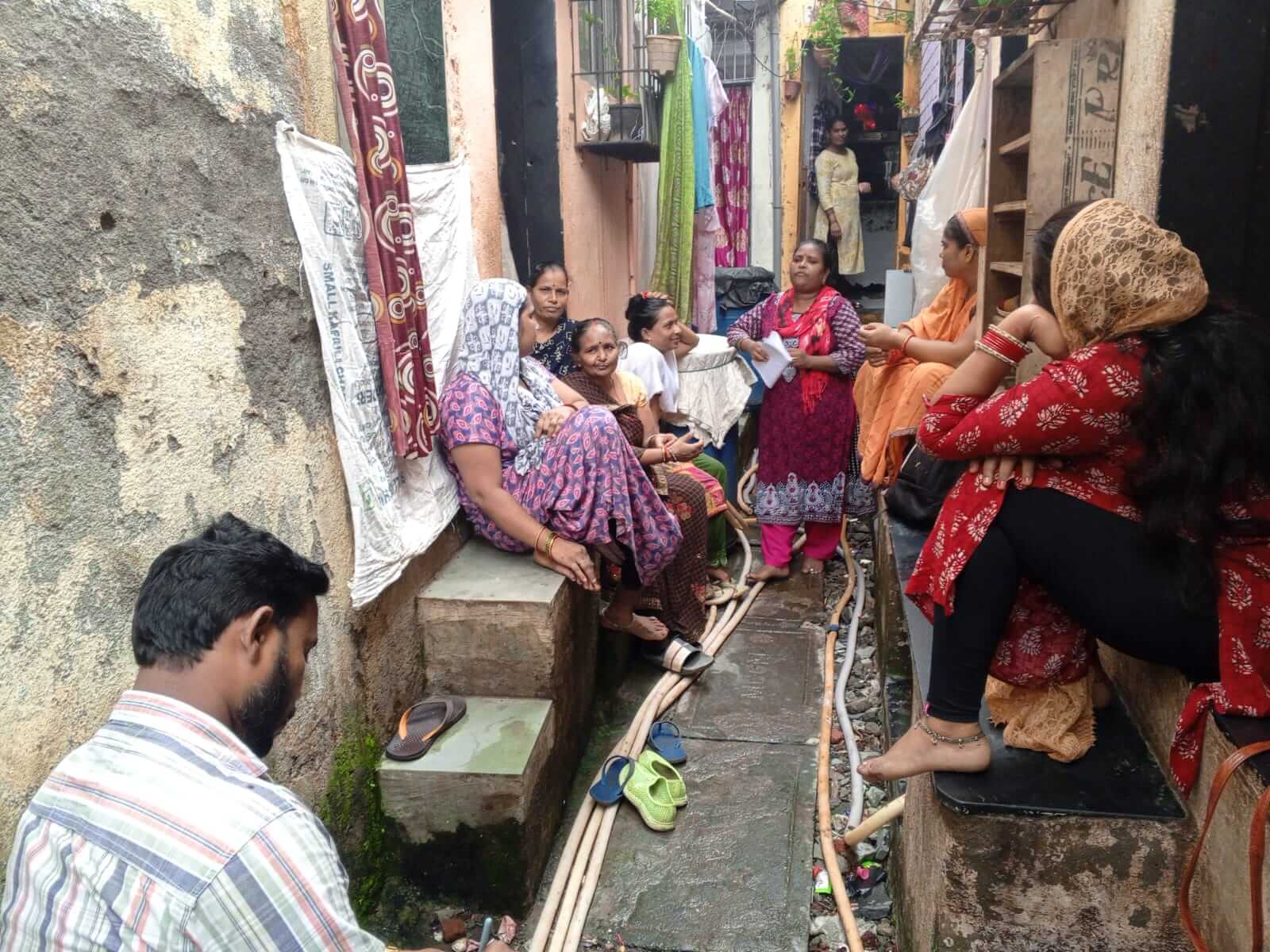
Finding a space to meet is the most basic need—and yet, one of the hardest to fulfill. In many areas, CPC members gather wherever they can: under trees, beside open drains (naalas), or in front of a local temple. A few communities are fortunate to have temporary access to a room—generously offered by local leaders—but even these spaces are not designated or consistently available.
An Anganwadi worker put it plainly: "The CPC needs a proper space so people know where to come when there’s a problem." Without a fixed meeting spot, visibility, accessibility, and continuity of CPC efforts suffer.
Time is Ticking—For Everyone
Urban life is a constant juggle. For many community members, volunteering with the CPC or CG means squeezing time between long commutes, demanding jobs, and responsibilities at home. Children, too, have tightly packed days—school, tuitions, and other after-school activities often leave little room for consistent participation. This scarcity of time affects not just engagement, but also the depth and regularity of discussions around child protection.
Fragmented Communities, Diverse Realities
Urban bastis are vibrant tapestries woven with threads from across the country—families from Uttar Pradesh, Gujarat, Maharashtra, and other states live side by side, each bringing their own languages, customs, and survival strategies. But this diversity also means that building trust can be a slow process.
CPC and CG members often encounter lukewarm or selective interest in their activities. Some residents may not relate to or prioritize the same concerns. As a result, outreach must be thoughtful, sensitive, and deeply contextual.
You See What Children See—and It’s Not Always Safe
Urban density means close proximity—and not just of homes, but of behaviors. One CG member shared how children in her community are sometimes asked by adults to fetch alcohol or substances. In another basti, children began mimicking the gambling habits of men they observed daily. These seemingly small incidents are powerful reminders of how vulnerable children are to adult influences, especially in unregulated public spaces.
You Try to Work with the System—and It’s Not Easy
Even when communities are willing to act, executing change in urban areas is anything but straightforward. Governance structures are multi-tiered, often slow-moving, and dependent on the responsiveness of local corporators or ward officials. Effective collaboration with authorities requires persistence and strategic advocacy—qualities that CPCs are building, but which require time and support.
The Shadow of Urban Redevelopment
Insecurity around land and housing further complicates matters. In many bastis, families live with the constant uncertainty of redevelopment—unsure if they’ll be relocated, when it might happen, or what it will mean for their children. Such instability makes it harder to invest emotionally and practically in long-term community work.
Navigating Schools and Systems
One CPC member voiced a challenge we hear often: “Our children go to different BMC schools. How many schools can we go to?” Each school has its own dynamics, authorities, and set of challenges. Community members worry about spreading themselves too thin—and more worryingly, about potential backlash against their children if the CPC raises concerns with teachers or administrators.
Cracks in Infrastructure, Burden on Communities
Finally, the everyday landscape of urban bastis is riddled with infrastructural gaps. Overflowing naalas, erratic waste disposal, limited toilets and water points, and lack of safe play spaces are common across settlements. During the monsoons, flooding often exacerbates these problems, making children’s safety and mobility even more precarious.
These are not issues that a single body can fix. They require coordinated action across multiple departments—urban planning, municipal authorities, local governance, and community participation.
Looking Ahead: Small Steps, Deep Impact
Despite these daunting realities, community members continue to show up—holding meetings, raising their voices, supporting one another, and showing an unshakeable commitment to their children’s futures.
The urban context demands creative thinking, deeper alliances, and patient, place-based advocacy. As one of our team members said recently: "Every time a CPC finds a way to meet—whether in a borrowed room or beside a naala—it’s a quiet act of resistance. It’s them saying, ‘We are here. And we will keep working for our children.’"