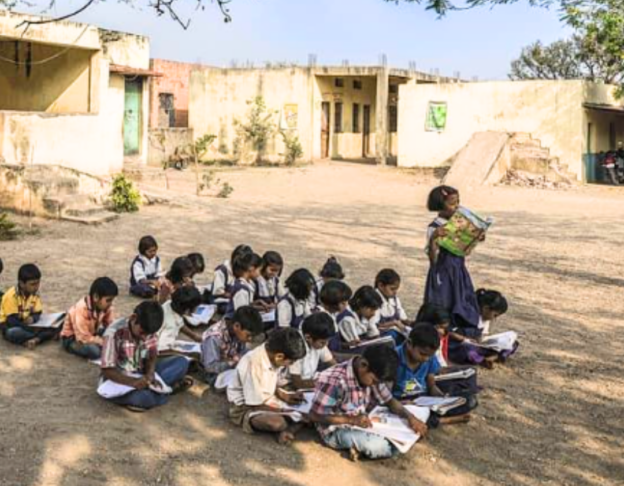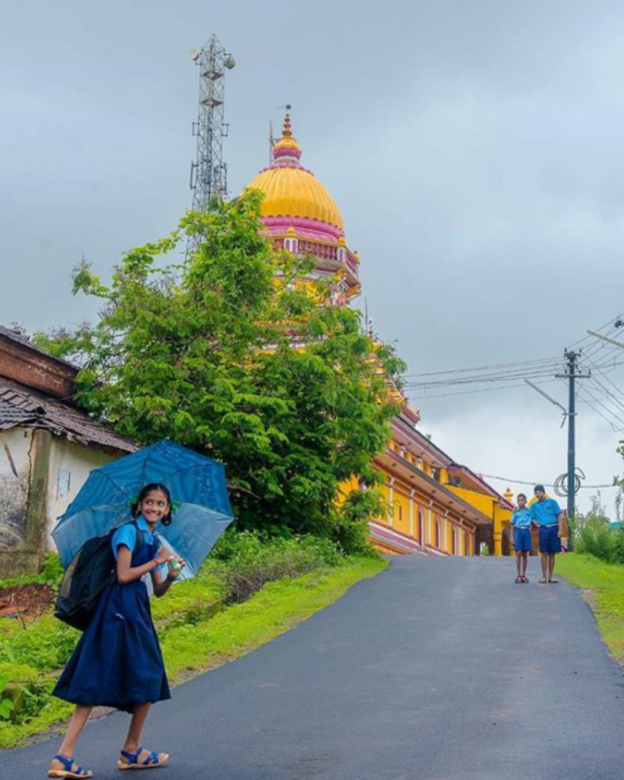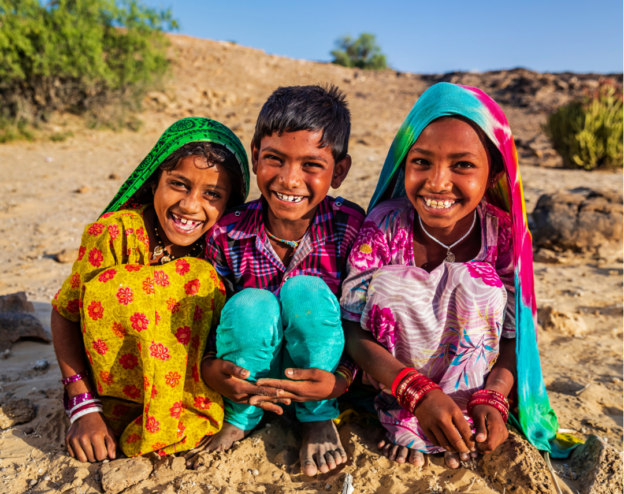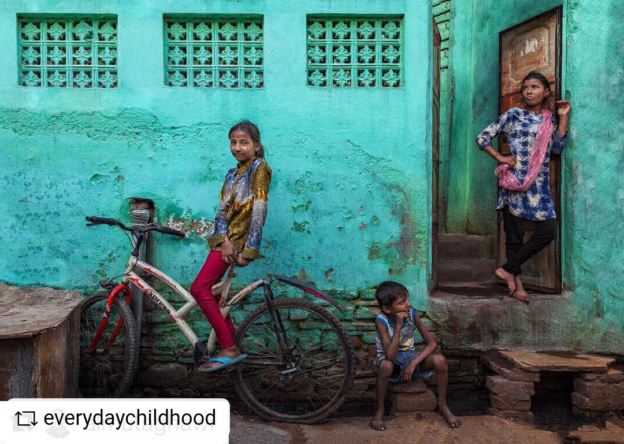

In the quiet village of Charhata, located in Beed district, a small yet significant change began when five Katkari children, aged 6 to 10, took their first steps into school. For generations, education had been an unfamiliar concept in their community, where cultural norms and economic struggles dictated survival over schooling. But thanks to the collective efforts of the Village Child Protection Committee (VCPC), School Management Committee (SMC), and community leaders, this narrative began to change.
The Katkari[1], also known as Kathodi, are a Scheduled Tribe and one of the three Particularly Vulnerable Tribal Groups (PVTGs) in Maharashtra, alongside the Madia Gond and Kolam tribes. Historically, they were forest dwellers engaged in activities like producing catechu (katha) from the khair tree, which is reflected in their name. Over time, deforestation and restrictions on forest-based livelihoods have led many Katkari to migrate and seek employment in sectors like brick kilns and agriculture. In Beed district, the Katkari population is relatively small, with 62 individuals recorded in the 2011 Census. Despite their limited numbers, they face significant challenges, including social exclusion, economic hardship, and limited access to education and healthcare.
During a routine VCPC meeting, members discussed the challenges faced by children in their village. It was when the Children’s group conducted the Mapping exercise to identify the children out of school that the plight of the Katkari children came to their attention. Despite living in Charhata for two to three years, none of these children had ever attended school. This issue was raised with the VCPC
The VCPC decided to probe further and visited the families to understand why. What they discovered was a combination of cultural tradition and logistical hurdles. In Katkari culture, schooling was not a priority—children were expected to stay home and help their families. Additionally, the parents lacked the necessary documents for school admission, making the process seem insurmountable.
The Katkari families had migrated to Charhata, seeking sustenance and stability. Their primary livelihood came from burning wood to make coal, which they sold to make ends meet. Others worked as daily-wage labourers in nearby fields. Financial hardships were a constant reality, and the idea of sending their children to school seemed like an unattainable luxury.
Initially, the Sarpanch was aware of the issue but did not consider it a priority. However, through repeated discussions during VCPC meetings—where members discussed the long-term consequences of children being out of school and collectively emphasized the urgency of the matter—he was moved to act. The growing pressure and shared concern from other members pushed him to take ownership of the issue, and he soon became an active advocate, playing a pivotal role in the intervention
The VCPC members , SMC chairperson, Sarpanch, and school teacher, decided to intervene. They knew that it would not be easy, but they were determined to make a difference.
During three rounds of home visits, the team engaged in meaningful conversations with the parents, addressing their concerns and aspirations for their children. As they spoke, they posed questions that encouraged reflection: they asked if the parents wanted their children to face the same struggles they had endured and whether they wouldn’t want them to have opportunities they never experienced themselves.
These questions struck a chord with the parents, prompting them to consider a different future for their children—one that involved education and the promise of a better life. The conversations opened their eyes to possibilities they had not previously imagined, fostering hope for a brighter tomorrow.
The families lacked essential documents needed for school admissions, so the VCPC and school teacher stepped in to help. They assisted in acquiring the necessary paperwork and met with the cluster coordinator to facilitate the enrolment process.
When the day finally arrived for the children to join school, it was marked with a small yet meaningful celebration. Accompanied by their parents and some VCPC members, the children were welcomed with open arms. The event was more than a symbolic gesture—it was a statement that education was now a valued part of the community.
Today, the five Katkari children attend class regularly and participate in their lessons. While they remain shy during Children’s Group (CG) activities, they have started attending regularly—a sign of their gradual integration into the community's educational ecosystem.
Their parents, too, have become vocal supporters of their education, recognizing the potential it holds for breaking the cycle of poverty and instability.
This story of the Katkari children in Charhata is not just about enrollment; it’s about transformation. It’s about a village coming together to ensure that its children have the chance to dream, learn, and thrive. And in doing so, it has laid the foundation for a brighter future for generations to come.
[1] Amitabha Sarkar; Samira Dasgupta (1 January 2000). Ethno-Ecology of Indian Tribes: Diversity in Cultural Adaptation. Rawat. ISBN978-81-7033-631-0. Retrieved 2 April 2013.
^ Ministry of Tribal Affairs (2011). Annual Report. New Delhi: Government of India.
^ Jagan Karade (July 2008). Development of scheduled castes and scheduled tribes in India. Cambridge Scholars Pub. ISBN978-1-84718-606-5. Retrieved 2 April 2013.