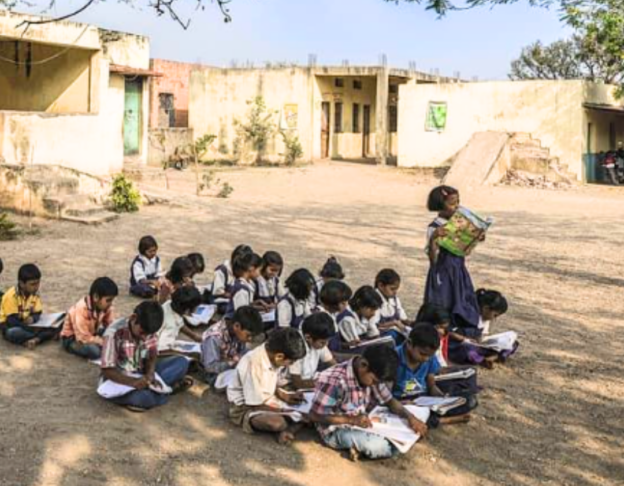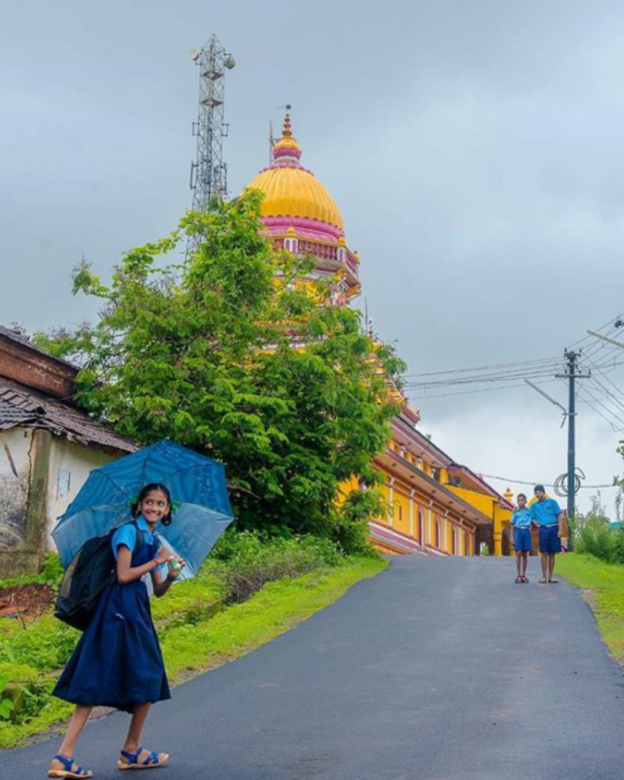

Nahara, a large agricultural village in Balasore, has been witnessing a positive shift in its approach to child protection, led by the Panchayat’s commitment to creating a safer environment for children. The village, which has an Anganwadi Center (AWC) and a primary school with over 230 children, has been actively engaging in child-led community assessments to identify risks.
While farming, especially paddy cultivation, and small businesses remain the mainstay of the economy, the village is also undergoing infrastructural development, with various construction projects being implemented in phases.
In May–June, during a community mapping exercise, children identified unsafe spaces in the village. One major concern was the construction site of a water tank, part of the first phase of Panchayat development work. The presence of daily wage laborers, hired from outside the village, led to incidents where laborers were reportedly passing sexual remarks at girls and bullying boys, especially when they were on their way to school, tuition classes, or returning home during lunch breaks. Given its proximity to the school, the site posed a serious safety threat to children.
Upon identifying these concerns, the village’s Children’s Group (CG) approached the Village Child Protection Committee (VCPC) for support. In response, the VCPC organized a joint meeting with CG and decided to visit the site to assess the situation. Parents accompanied VCPC members to confront the workers regarding their behavior.
During the initial visit, the workers denied any wrongdoing. However, upon cross-checking with the children, the VCPC found that harassment was still ongoing. Recognizing the need for stronger action, the VCPC decided to escalate the matter in the August Gram Sabha meeting.
During the Gram Sabha, CG representatives voiced their concerns, with the VCPC backing them up. The Sarpanch, who was previously unaware of the issue, assured immediate action. A few days later, he personally visited the site, accompanied by VCPC members and other villagers, to warn the workers against further harassment, stating that legal action would be taken if the behavior persisted.
Understanding the importance of follow-ups, the Sarpanch conducted multiple visits through September-October to ensure compliance . Initially, the workers continued to deny the allegations. However, during a later visit, the Head Mistri admitted that one of the workers had been responsible for the inappropriate behavior and assured the community that such incidents would not recur.
It is stories like this that are building evidence that a ground-up demand is key for change to take root. From not speaking about the issue, in Nahara, children are finding a more confident voice through the platform of the Children’s group and raising issues that concern their daily lives. In collaboration with VCPCs, they are challenging the silence around child safety and advocating for action.
More importantly, Panchayats are being held accountable—not just for infrastructure development, but for ensuring that those they employ, including laborers, vendors and local businesses, uphold children's rights. The response in Nahara highlights the critical role of local governance in creating safer environments for children. When community-led mechanisms actively intervene and hold perpetrators accountable, they set a precedent—one where children are heard, their safety is prioritized, and harassment is not tolerated.