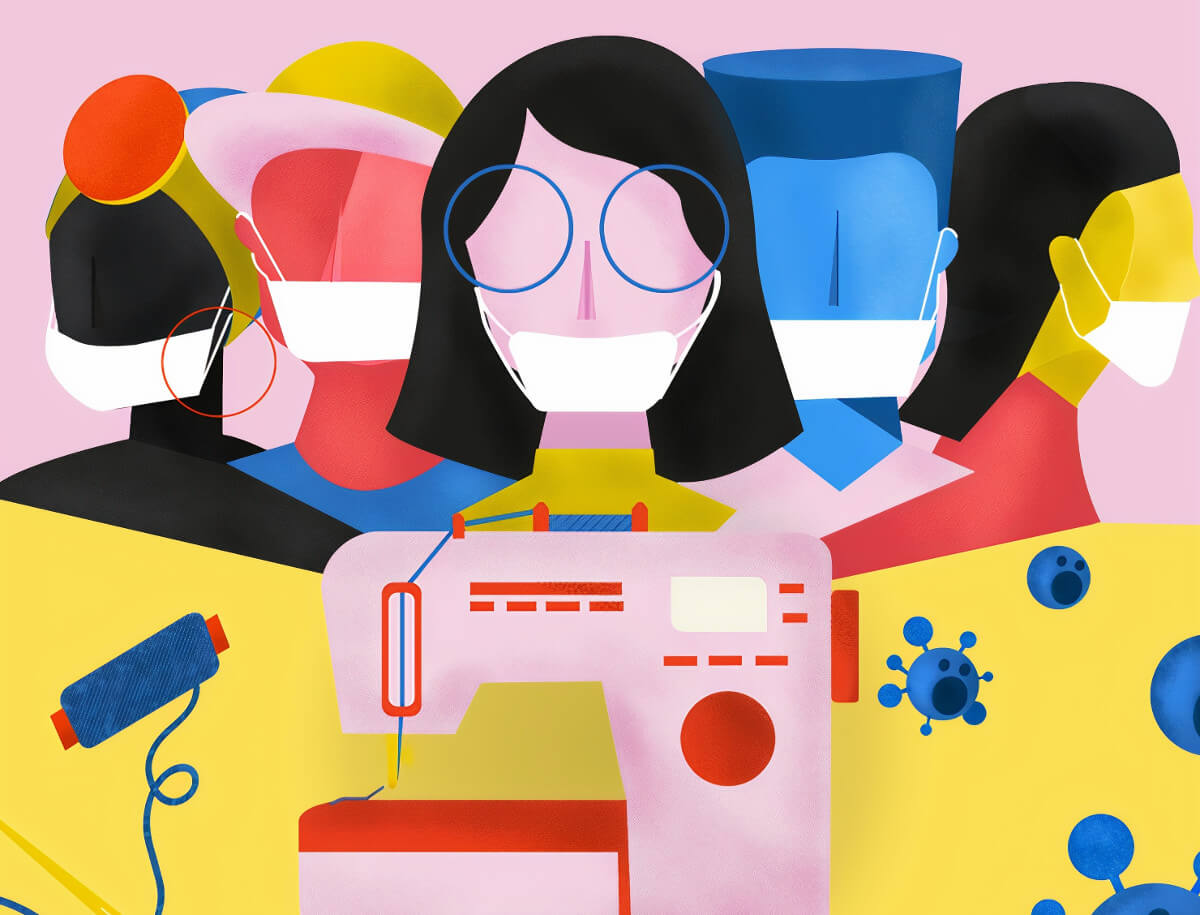

“Coverage of the Covid-19 pandemic has understandably focused on the negative impact of it and the measures to prevent its spread have had on citizens worldwide, but less attention has been given to the creative and considerate initiatives that have also come out of it,” says creative think tank Crin, that produces new and dynamic thinking on human rights, focusing on children and young people. In this feature, Crin took an unashamedly positive view of things amidst the pandemic.
This made us ponder on how we have been only hearing negative stories amidst the Covid-19 pandemic. One year after the first lockdown was announced in India, taking inspiration from Crin, we too attempt to look at what’s gone right and bring you pandemic positive stories in the areas of mental health, education, parenting and family dynamics.
Disclaimer: By showing a positive side of things, in no way are we negating the challenges that children and young people faced amidst the pandemic.
Education
Schools experienced a shift in the way they were teaching and adapted new ways of learning, leveraging tech and coming up with creative ways of teaching. Gajalpur Government School in West Bengal collaborated with the block development officer and conducted classes on loudspeakers. Similarly, a school in Bastar too put 6 loudspeakers for around 300 families where they would teach English (through Halbi, a tribal language), and disseminate information on malnutrition and other community issues.
With children spending more time at homes than classrooms, the Center for Science and Environment (CSE) encashed this opportunity and brought environmental education to children’s homes. CSE developed a tool called Audit@home for grades 5 to 12, that provided students with the opportunity to observe, assess and improve the resource consumption patterns in their households concerning air, energy, food, biodiversity, water, and waste.
The digital divide became more prominent than ever which made online learning unaffordable for children and families from low-income communities. Addressing this issue, Bangalore based youth started Support Our Students, an initiative that obtained refurbished laptops and tablets and donated them to children from low-income communities.
For children from low-income communities, even access to books remained a concern and school children from Baridandi in Uttarakhand created a mobile library for its children.
Parenting and Family
Locked up and cooped up inside homes has been a challenging time for both children and families. But it also meant that many families were able to spend more time with their children. Grant McCracken, a cultural anthropologist, has been studying how the relationship between mothers and children is changing during the pandemic.
“…many mothers have been spending more high-quality time with their children.. that has led them to re-examine some personality traits they wanted to foster in their children: kindness and compassion over the competition, and empathy for those who may be struggling.”
The lockdown saw many fathers upping their game and many realised what it’s like to juggle housekeeping, parenting and work. With 72,857 Anganwadi centres shut and around 16 lakh children locked at home in Odisha, the Department of Women and Child Development in collaboration with UNICEF launched the ‘Ghare Ghare Arunima.’ This initiative created a calendar-based list of activities for children where the Aangnwadi workers focused on the menfolk in each house to ingrain equal childcare responsibility.
For grandparents, who were at high risk, staying indoors and adapting to new means of technology was challenging. Realising her own grandmother’s struggle to use technology, this 14-year-old from Chennai started TechEdEn- online classes that teach senior citizens to understand technology.
Mental Health
In a country that spends less than one per cent of its total healthcare budget on mental health, the pandemic forced us to talk more about the mental health and well-being of our children. Realising that little hearts can have big emotions, this year we saw many platforms, organisations and innovation around addressing issues of mental health.
At Leher, we created a resource of Stay At Home Activities for Children. Realising that children from urban low-income communities had few means of entertainment and recreation, we collaborated with creative professionals to create Apalam Chapalam, a performative storytelling channel that broadcasted stories to children through a network of 65 +organisations via WhatsApp.
Storybooks and illustrations are a good way to share information about complex issues with children. Here’s one such picture book- My Hero is You, a fictional book developed by and for children that aim to help families understand and cope with COVID-19. A project of the Inter-Agency Standing Committee Reference Group on Mental Health and Psychosocial Support in Emergency Settings My Hero is You is a compilation of the thoughts of over 1,700 children, parents, caregivers and teachers from all around the world on how they coped during the lockdown. You can download the picture book, here
With WhatsApp groups for rural children and zoom sessions for school students, Minds At Play, a curriculum-based intervention supporting the mental health of youth in India, is helping children cope during this difficult time.
These stories show us how organisations, young people have pushed themselves to use the power of innovation, collaboration and creativity to work for the rights of children and child protection. If you’d like to share a pandemic positive story with us, reach out to us at contact@leher.org
Leher is a child rights organization working to make child protection a shared responsibility. We envision a society where caring families, alert communities, and responsive governments come together to ensure the rights and protection of all children.
To read all our blogs click here & to read all our campaigns click here.