
Ask any parent and they’d tell you parenting during one year of the lockdown hasn’t been easy. School closures created a disruption in routine and overnight, parents had to adapt to keep their children engaged at home. Children weren’t allowed to meet their friends that left them with little play and recreational activities. This also increased a child’s screen time when children were already grappling with adjusting to online learning.
To understand the challenges faced by parents during the lockdown and how the lockdown impacted children, we did an email interview with Reema Ahmad, a single mother who shares her parenting journey with his 13-year-old son Immad during a year of the lockdown whilst being infected with the Covid-19.
Q. If you could go back into memory and describe the day when you first heard about the 21 day lockdown period? As a mother, what was going on in your mind?
I think one of the first things I felt as I heard about the lockdown was that it would
pass. At that time it didn’t seem like something that would go on to affect our lives so hugely.
Q. Tell us about your child. How did he cope with the lockdown? How were his moods during the lockdown and the year in general?
It was very hard for him. Everything that marked the day for him in terms of movement and playtime just went out of the window. From swimming to free play to football with neighbourhood friends, everything was closed off. It made him very moody and disrupted all routine. His sleep pattern was disrupted and he watched more media than he normally would. I think the only thing that kept him sane was the dogs he had adopted. He would sit with them outside in the heat and not mind it. Especially when I fell sick with covid, the dogs were the only company he had. He was just very lonely.
Q. You also got affected by the virus. How did you feel about being in isolation, not being able to be around your child? How did your child respond and react to you being away? Did you meet at all during the quarantine?
I’ll be honest and say that it was a terrible feeling to be cut off from him knowing that he had no one to talk to or play with. We are a very huggy feely mother-son duo and there were days he would stand outside my door and talk to me not able to come inside. It just broke my heart to see him like that. After the tenth day of being tested positive, he just gave up and came into my room. We sat with our backs touching. I remember feeling so helpless and sad.
Q.You are also a single mother. How did that have an impact on parenting during the pandemic? Who did you reach out to for support when you had some of the difficult moments?
Parenting has always been challenging for me as a single mom. My parents are elderly and my ex-husband is absent at best. During that time, there were days where I would want to reach out to him to care for our child, to be with him because I couldn’t. But I know it won’t happen. I had to accept that and just let go of things like routines and strict home rules because these just couldn’t be implemented. While I felt totally out of control as a parent, it was a humbling experience in terms of accepting that these exceptional times called for letting go of old ways and accepting that perhaps the best we could do wouldn’t meet usual standards. Our cook really helped to take care of my son and his everyday needs. He also learned to take care of himself a lot which I think was a blessing in many ways. Other than that, my connection with my siblings via video calls really helped cheer us up.
Q. What strategies did you imbibe to recreate a schedule and routine for your child and yourself?
I think I just let go of devising any strategies, I had a long stint with covid and I was very sick for three months, barely able to move. In this scenario, I had to accept that there was very little I could do. Online classes were a drag and I wrote to the school to say that my son would do what he could but it was okay if he missed classes as long as his schoolwork was done. The whole thing made me realise that we function within rat races and more than anything else, it is emotional resilience that will help children in their future. I am already very disillusioned by the Indian education system and the whole covid thing confirmed my feelings. Long online classes were more a strain on children than a benefit. What I focussed on instead was eating together, playing outside as much as possible and reading together. Other than that I let schedules slide.
Q. What questions/concerns did your child ask about the lockdown and Covid-19? How did you respond to his questions especially when we ourselves lived with uncertainty and did not have all the answers?
I think one of the questions that my son asked a lot was when are things going to be better, when could he see his friends? As a kid, he has never felt at home at school but after the lockdown, he even began asking when schools would reopen? It was a reminder of how lonely he felt and how desperate he was for social interaction. I remember responding as honestly as I could, saying that these were uncertain times and that we don’t know what the future will be like. We still don’t know. I believe it is important, to be honest with children in a gentle way. Spinning tales to comfort them only leads to more pain for them later.
Q. For children, a lot changed during the lockdown. Online classes, not being able to meet their friends, being away from grandparents, not being able to play and not knowing when the phase would end How did you and your child navigate this journey together?
We navigated this together by sharing as much as we needed to. I tried to not be harsh around certain things like food or tv knowing that these are ways that children are simply coping with during this time. I allowed myself to trust in the innate resilience of children and believe that they will bounce back when things become better. Of course, there were concerns and arguments around screen time and once or twice I had to limit gadget time by taking gadgets away. I felt bad but there are things that one cannot solve with a gentleness only. We managed to find a balance.
Q. Parents and especially mothers are supposed to know it all. Often, we do not talk about the difficult times of parenting and are not openly vulnerable. What was your inner dialogue with self like? What were some of the challenges you faced and how did you overcome them?
I was very hard on myself this whole time looking at how other kids were attending online classes and were acing exams. I also know that parents complete kids homework and that all kids were cheating during online tests. But it still hurt that my child just was not able to cope with school online. I actively reframed my self-talk by telling myself that school is no marker of success in life. That the emotional resilience and warm relationship that I share with my kid is far more important than grades. It was hard to allow myself to exit from the rat race but I worked on it. The future is uncertain any which way, and I told myself we’ll survive and thrive even if we don’t get glittering accolades. It takes a lot to focus on the bright side but I think that helped me not beat myself up as a mum.
Q. Amongst, other wonderful things that you do, you are also a relationship counsellor. What are some of the concerns parents or mothers came to you with? Was there any underlying theme in all the sessions that you could see?
I think one of the most common things I see in parents is this inability to really listen to their children while expecting them to fit social norms. I think we have forgotten to look at growth in our children as cyclical. We believe that only linear success is success and we simply ignore emotional health in children when it comes to that. Most parents simply want what they want without taking into account what their children are feeling like. I think that is the root cause of so many issues that people have later in life; not being allowed to be their authentic selves.
Q. Post a year of the lockdown, we perhaps still do not know if we’d be able to go back to times which seemed normal. Could you share 5 tips with us for parents who are navigating this journey with their children?
I’d say just keeping in mind the following things will help ease parents
1. It is okay for our kids to take time and explore things differently than what is advised and prescribed by so-called authorities. Being gentle is important.
2. I think it helps to not measure ourselves according to common standards of parenting. Every child is unique, we as parents are unique and our circumstances are unique. We cannot expect ourselves to be awesome at parenting all the time. That kind of pressure can cause so much stress to both parents and children.
3. Nurturing emotional resilience in children actively by paying attention to their feelings and finding ways to communicate without blame really helps. Sometimes we get so busy trying to get things done that feelings get brushed aside. That can cause trouble later.
4. Learning to have fun, especially with teens and tweens and letting go of social criticism and fear of others helps too. Kids come closer to us when they feel free to be themselves with us. Watch their shows, know about their likes and dislikes without judgement and do silly things with them even if you don’t like it is okay. It brings us closer to our kids.
5. Forgiving oneself for messing up as a parent is important. We’re not perfect, we’re learning on the job. As long as you are committed to self-awareness and self-work, it is all okay. We learn.
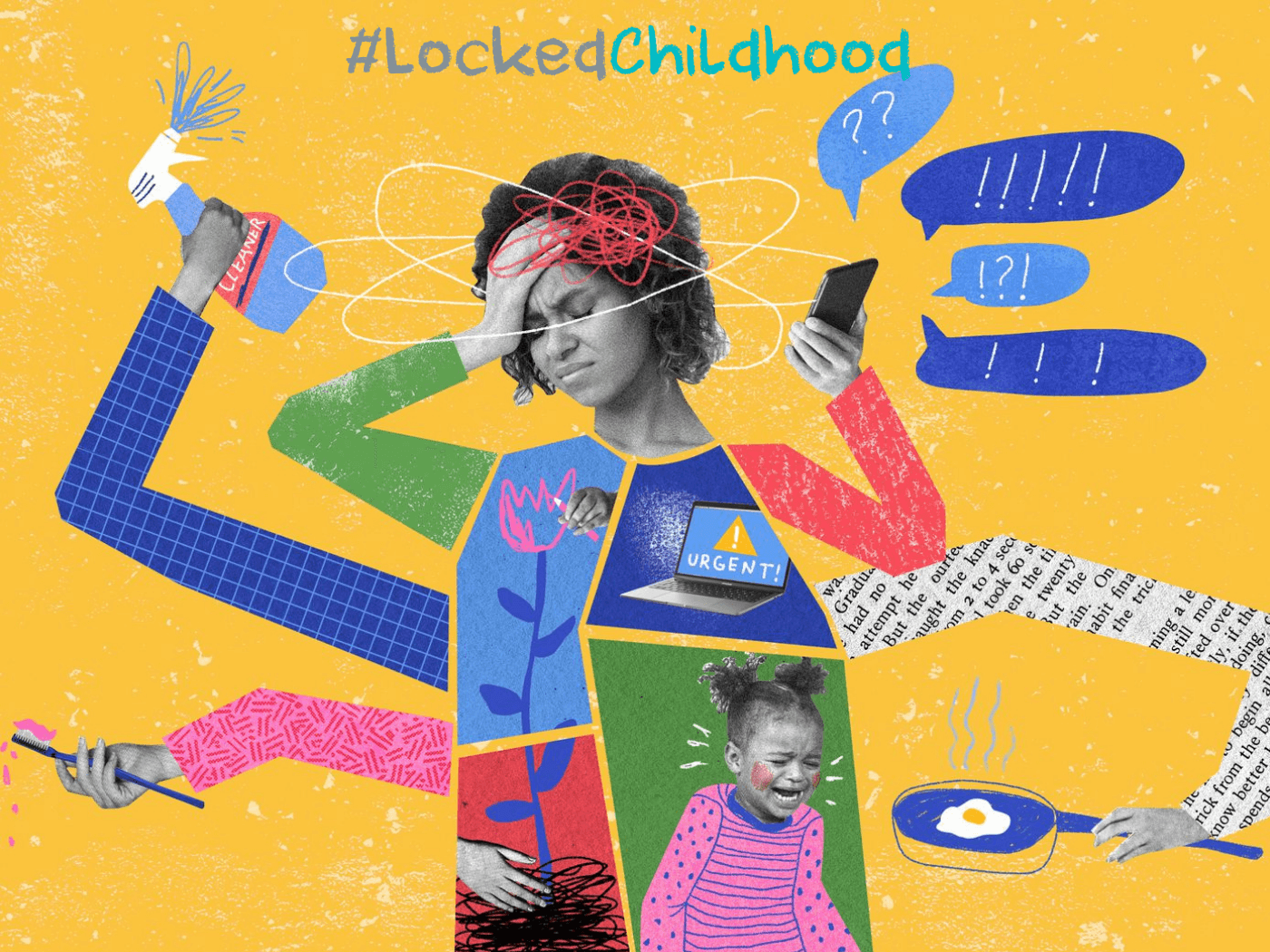
#LockedChildhood is our micro series that is capturing stories on What One Year Of Lockdown meant for our children, their rights and child protection.
Leher is a child rights organization working to make child protection a shared responsibility. We envision a society where caring families, alert communities, and responsive governments come together to ensure the rights and protection of all children.
To read all our blogs click here & to read all our campaigns click here.