
“Children are not the face of this pandemic. But they risk being among its biggest victims.”
– Policy Brief: The impact of COVID-19 on children
In India we witnessed sudden shut-down of industry which triggered massive reverse distress migration of labour from cities to villages, and now national reports indicate that more than 1.8Crore jobs have been lost. There is no count of jobs lost in the informal sector. As the pandemic travels through the hinterland of the country, India now tops global charts with the highest rate of infections. This global health crisis has quickly spiralled into a socio-economic upheaval disproportionately impacting vast already vulnerable sections of our population who were already living on the margins. Children-39% stand to be the most impacted by the fall outs of this pandemic– poverty, hunger, malnutrition, physical and mental health issues, school drop out, child labour, child marriage, domestic violence, sexual exploitation, trafficking, are very real consequences. Our government, society, individuals, and communities are going to have to step up with measures to address and prevent families from falling into crisis. Else this pandemic might cost India our most precious demographic dividend, our children!
Several national coalitions for child rights in India came together to outline minimum essential requirements to protect rights of children in the pandemic in the form of a policy brief addressed to the Government. A key demand of the brief was to strengthen community led monitoring and oversight for child rights to prevent children from falling out of safety nets of family and community. To mobilize and mandate communities in a participatory manner- one that promotes their leadership in identification of needs and arriving at solutions to support children and families. This would include local authorities, functional village level groups/committees such as Village Child Protection Committees, School Management Committees (SMC), SHGs, VHSC, Nehru Yuva Kendra fellows, adolescent girls’ groups, village youth groups, parents groups, local leaders, community elders, residential cooperatives, and Resident Welfare Associations.
Since 2014, Leher has been implementing a pilot community led child protection intervention in the District of Madhubani, Bihar using participatory processes to test and learn the potential of local leadership of communities in demanding and securing child rights and protection. Leher’s vision is a society where caring families, alert communities and a responsive government work together to ensure rights and protection for every child.
Taking the Madhubani learning forward, in June 2017, the State Government of Maharashtra, Maharashtra State Child Protection Society (MSCPS), UNICEF, and Leher entered into a partnership to build synergy (linkages and relationships) between communities, young people and the child protection system. Creating a “Virtual companion aka a VCPC Tool Kit” was the key aspect of this partnership. Creating space for communities to be protagonists in their own journeys of change, using local culture-folklore, language and humour, this kit helps to break down complex issues into simple yet relatable scenarios. It demonstrates that no problem is too big to solve if a community is prepared to come together to understand, think and do-it-themselves.
The VCPC toolkit comprises 8 films and 5 IEC materials which speak to VCPC and community members. It also includes a training manual with more than 30 hours of training for trainers who have the opportunity to train, interact, orient VCPC such as the District Child Protection Units (DCPU) staff, community mobilisers from NGOs/government, youth volunteers, and VCPC members themselves.
Restrictions of physical movement led to working online from home for those who could. Virtual discussion platforms have been utilized effectively to connect people across geographies even on child protection issues. Leher takes the opportunity to introduce the VCPC Took Kit. We share it as a template for adaptation and further building to suit different regions, cultures and contexts. We believe it would catalyze and accelerate work towards strengthening community based monitoring and oversight of child rights. The contents travel with ease through social technology networks such as WhatsApp, YouTube. Online training platforms can be utilized in building capacities of those interested in initiating this work in districts.
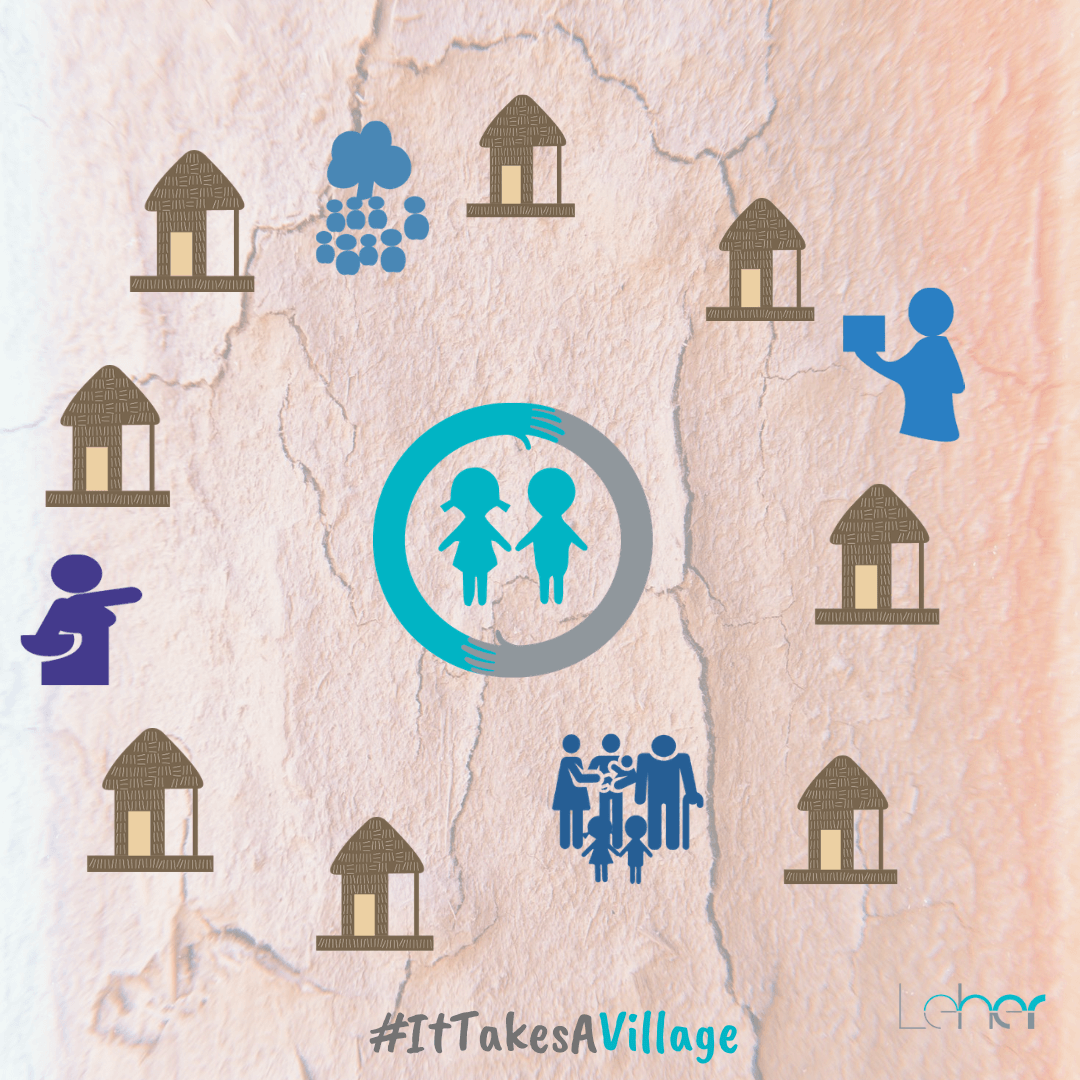
#ItTakesAVillage: These 8 Films Show How We Can Strengthen Community Led Child Protection – Link
#ItTakesAVillage: IEC and Tools in Your VCPC Tool Kit. – Link
Frequently Asked Questions About Your VCPC Tool Kit – Link
To watch the films, click here – YouTube Playlist
We take the opportunity to share the VCPC Tool kit for the use of State Governments, and NGOs. Leher offers these resources towards any collaborative initiatives with communities. Should you have any questions or feedback, feel free to reach us at contact@leher.org