Views of the author are personal, and not the views of the organizations he is associated with.
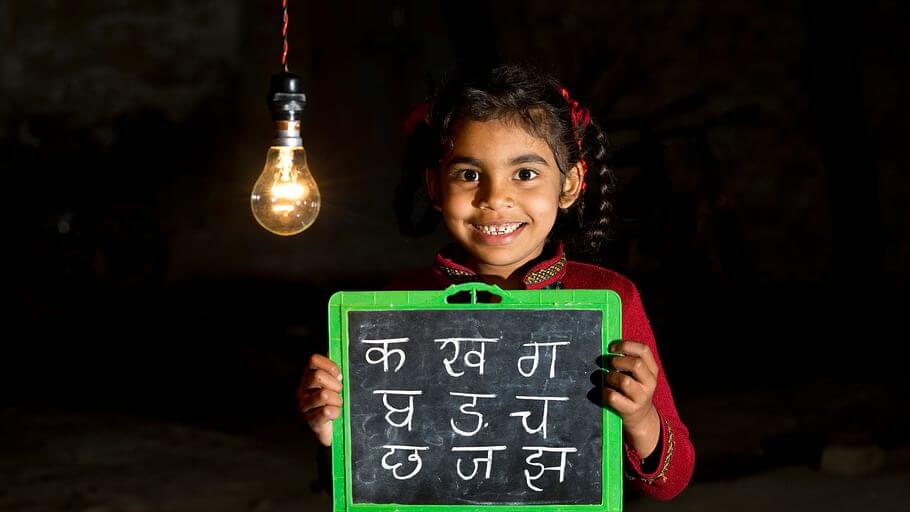
This was Periyar’s response to Rajaji’s Kula Kalvi Thittam (Hereditary education policy) in 1953. He would have responded similarly to the National Education Policy 2020, which the Government adopted on 29 July 2020. The NEP was supposed to be based on the Kasturirangan Committee, which met diverse stakeholders- from academicians, educationists, teachers, professors and bureaucrats at central, state, and district level, but did not care to consult two of its primary stakeholders: school children and the children who are not in schools. Neither did the Government. The fact that they have not participated means the NEP does not reflect their agenda, but that of the dominant elite. Further on, the children have to bear the burden of fulfilling their vested agenda.
Who are these dominant elites? On September 14, 2020, the Government constituted a 14 member expert committee for conducting a “holistic study of origin and evolution of Indian culture since 12,000 years before present and its interface with other cultures of the world”. The committee is an exclusive all men club, which include five from sanskrit-based departments and universities. There are two representatives from the World Brahmin Federation, that includes their founding member. There are no women, dalits and adivasis. There has been no attempt to make it representative of linguistic, religious and cultural diversity of this country. These members represent an otherwise dominant socio-political category: masculine, able-bodied, Savarna, heterosexual upper-class male which holds most of the privileged policy making positions in the country. This category dominates those at the helm of art and culture institutions or as Vice Chancellors and Directors of Universities. Interestingly, the NEP explicitly states that the curriculum and pedagogy are to be rooted in the culture, heritage, tradition and customs of this country. This expert committee is probably going to engrave the edifice for the new education system of this country in no time, and thus their continued hegemony of “masculine, able-bodied, Savarna, heterosexual upper-class male”.
The ability of this class to use secular terms to promote their vested interest to appeal to the progressive dominant caste is well known. The NEP is a case in point when it uses terms such as “preservation of rich languages” or “flexibility in curriculum” or “engaging pedagogy”. Primarily, the aim is to intervene in curriculum as well as pedagogy to align with now politically dominating irrational discourses that searches for the existence of plastic surgery in the ancient India. The power of this class is also to engage the population on issues such as syllabus flexibility, that is, a student can now take political science and physics together; or reduction in emphasis on board exam; or doing away with MPhil; or pros and cons of four years of graduation programmes. What these debates do not speak about is the hidden intent of the NEP to fulfil the need of continuous supply of cheap labour, which not only includes children but also those engaging in caste-based occupations. What is not discussed is the burden of the preservation of the ‘rich languages’ being now on poor and marginalised children. By stipulating the promoting of mother tongue and classical languages at the cost of English, the first or second-generation learners have to bear the most burden. For them, schools happen to be the only source of learning English, which would rarely be spoken at home or by peers. And typically, such learners are mostly from rural, poor, dalit and adivasi households. By ensuring that they are deprived of learning English, which is important for their social and economic mobility, the dominant class is pushing a policy, which uses, again, conspiratorially, a secular language to deprive their economic mobility, while they continue to access the privileged quota without any stigma attached to it.
One needs Periyar’s vision to see through the vested agenda in apparently good intentioned policies. A similar attempt was made in 1953 when the Rajaji Government in Madras introduced the Kula Kalvi Thittam (Hereditary education policy). The scheme was brought in for a secular objective of universalising primary education and providing opportunities for excluded children to participate in schooling. The enrollment was low and the dropout was high. Rajaji wanted to enhance the enrolment in schools by aiming to create a parallel system for children from depressed caste to be taught their hereditary occupation. But, within one year, the scheme was dropped after an open revolt by the Congress legislators and subsequent resignation of the Chief Minister. There were massive public protests against the policy. Periyar wrote in Viduthalai in November, 1953, “This educational policy is a casteist educational policy. This has to be opposed and abolished…is this educational scheme not a reconstruction and protection of varnashrama? Who physically labours and slaves in the name of caste – only we, who are called sudras. Should we keep doing our caste occupation while brahmins alone get positions, employment, authority and go higher and higher? Is this justified? We don’t think physical labour is disgraceful, but why should we alone do that work?” The massive protests caused the legislators to revolt.
However, what is important to understand is that the new CM, Kamaraj, who was from backward caste, not only dropped the kula kalvi policy, but also ensured that the enrollment increased by 100% in less than 5 years by launching a number of schemes, which included the presently famous mid-day meal scheme. The learning is that if there were no assertions from the margins, the dominant elites would find solutions within the four walls of the caste system and patriarchy, which anyway favours them. Kamaraj displayed that the progressive educational outcomes are possible without necessarily aligning with caste system and patriarchy.
If one were to look at NEP critically, one could take the case of a recently rescued devadasi girl in Karnataka. She was dedicated to the local deity at the age of 10. The practice, while now being illegal, is successfully ‘presented’ as if it has the sanctions of society as well as of religion. Now, what does the National Education Policy have for the girl? As a person seeking education, she is deprived of schooling. Her neighbourhood is still deprived of high schools. Her community is discriminated against on the basis of caste. Her community follows irrational superstitious traditions. Would the NEP-facilitated privatised education system run by the dominant caste be concerned about these habitations? Has NEP made any specific commitment to empower the community to stand for its rights against perpetrators that keep children from certain sections (caste, gender, religion, disability etc) away from education? Has NEP adequately made it a point to specify its intention to combat superstitious practices from among traditions that smack of patriarchy and casteism? Has NEP even attempted to craft an education system that would educate wider society to show dignity to fellow human beings? The NEP does not explicitly dismiss any cultural practices that take child’s dignity for granted and deny children the right to think rationally. For example, at this time of excessive sexual violence against children and others, the current NEP shies away from talking about the need for education on sexuality and masculinity within the school curriculum. An NEP based on Periyar’s vision would surely challenge the caste system that perpetuates discrimination; the notion of chastity that places virginity of a girl on a pedestal; the superstitious practices sanctioned by religion. Instead, the NEP has refrained from looking at caste and gender beyond beneficiary categories.
Moreover, the NEP 2020 has refrained from explicitly invoking democracy, secularism and equity. Without these principles, the political pedagogy for citizens of India would have different meanings altogether. Instead, the Government is handing over the system to the dominant caste through further privatisation. The reluctance to speak about the common school system is owing to its inertia to take on the capitalism, caste system and patriarchy. The Policy promotes privatisation so that the state could no longer even be made responsible, just like the fuel prices these days.
Therefore, the key line of enquiry should be why the NEP is refraining from dismantling the Brahminical enterprise, which privileges dominant elites. When one looks at the continuing discriminations based on caste, gender, sexuality, religion or migrant status, do we not see that the Indian education system is part of this problem? Is the NEP even striving to make the education system as part of the solution? The challenge is that Periyar’s NEP would not only have first called out the continued dominant caste male’s hegemony of masculine, able-bodied, Savarna, heterosexual upper-class male who occupy positions through privileged quotas, but also would have argued for transforming the education system to take on the caste system and patriarchy.