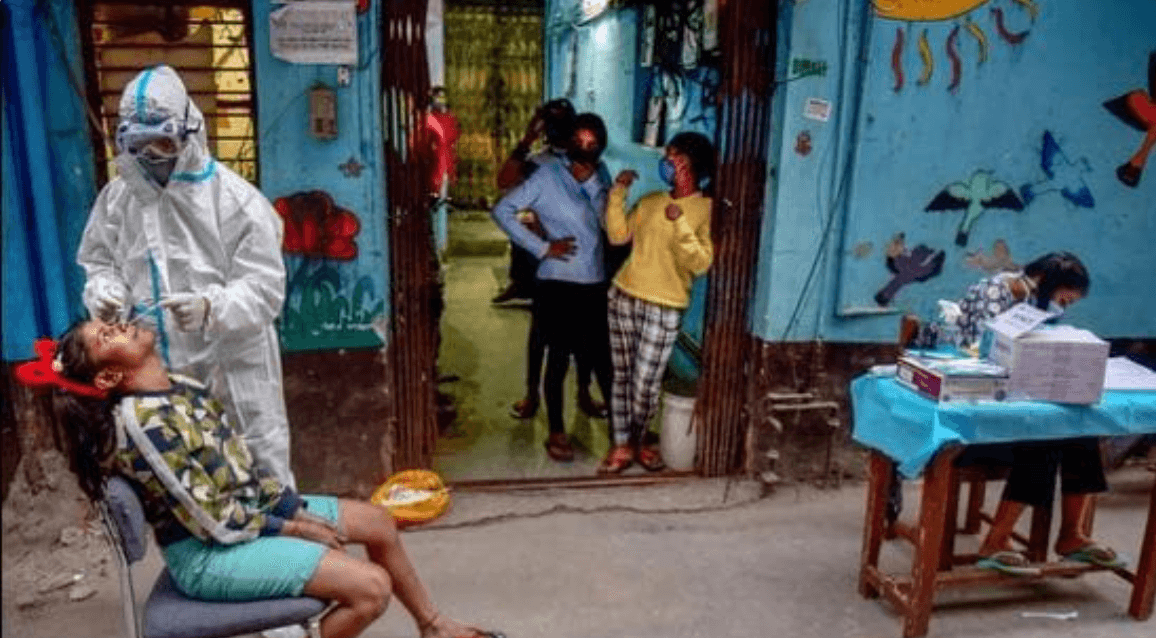
“The years 2020 and 2021 will remain as one of the most turbulent times in recent decades. Covid-19 has affected the lives of all sections of people but children inordinately will bear the brunt of COVID-19,” a news report by Telangana Today.
This calls for us to work harder for the rights of children. Let’s recap to look at the 21 major issues that impacted children in 2021.
1. School Closures Due To Air Pollution: Irrelevant and Misplaced

From malls to cinema halls when everything opened up, schools remained shut causing a loss of education for children for over 600 days. For lakhs of children, schools are more than a place of learning and are an important space for social, emotional and physical well-being. When schools had just about begun to open up, the high level of air pollution in Delhi forced school closures once again in December. Finding this “irrelevant” and “misplaced”, the Chairman of the Delhi Commission for the Protection of Child Rights (DCPCR) Anurag Kandu, wrote a letter to the Commission for Air Quality Management (CAQM) stating that it does not achieve the goal of protecting children.
2. Agency or Age? Would Raising The Age Of Girls To 21 Reduce Child Marriage?

Human Rights Activist Enakshi Ganguly, strongly makes a point here asking if raising the age of marriage leads to women being empowered, increasing their agency, and enabling them to control their own fertility? She adds, “What is needed is a 360-degree approach focused on creating an enabling environment which is safe and empowering. We need to recognise and decriminalise non-coercive consensual adolescent sexuality between peers and focus on engaging with them on responsible sexual behaviour.”
3. Social Isolation Amid Covid-19 And The Lingering Impact On Children

In 2021 too, we saw how children continued to have limited peer interaction and learnt using their screens. This lack of social interaction has impacted the Mental Health and Well-being of children. “At least 332 million children have their mental health and well-being at risk because of the pandemic-induced lockdowns, warned UNICEF. According to a separate UNICEF report, “The closure of 1.5 million schools due to the pandemic and ensuing lockdowns in India in 2020 impacted 247 million children enrolled in elementary and secondary schools.”
4. Hunger In Numbers

While the real impact of Covid-19 on children is much more than just a health hazard, it could also exacerbate the health and nutrition crisis among the children. According to this news report, “The Women and Child Development Ministry estimate that there are 17,76,902 (17.76 lakh/1.7 million) Severely Acute Malnourished Children (SAM) and 15,46,420 (15.46 lakh/1.5 million) moderately acute malnourished (MAM) children as of October 14, 2021.
5. Climate Crisis: A Child Rights Crisis

Children across the world have inherited a problem that is not of their making. A report from Save the Children – Born into The Climate Crisis: Why we must act now to secure children’s rights – highlights the impact that the climate crisis is having on children’s rights now, and for future generations. Further, a report by UNICEF reveals that India ranks 26th out of 163 countries where children are at extreme risk of the adverse impacts of the climate crisis.
6. An Increasing Number Of Suicides Among Children: A Systemic Failure

According to the National Crime Records Bureau (NCRB) data, 11,396 children died by suicide in 2020, an 18 per cent rise from 9,613 such deaths in 2019 and a 21 per cent rise from 9,413 in 2018. The increasing number of suicides among children reflects a systemic failure. “It is a collective responsibility of parents, families, neighbourhoods, and government at large to provide a conducive ecosystem where children can look forward to realizing their potential and fulfilling their dreams for a bright future. Committing suicide, on the contrary, is an antithesis,” shares, Prabhat Kumar, Deputy Director Child Protection, Save the Children in a newstory to NDTV.
7. Labelling Children as ‘Covid Orphans’ Must Stop

The Second Wave of Covid-19 impacted all of us but for some children, who lost one or both parents,it was especially tough and many have been struggling to survive. “The need of the hour is for the state to identify all children living in various circumstances, who have been rendered vulnerable due to the impact of COVID-19, extend relief measures & support to them. That way, no child will have to live with the tag of being a ‘Covid Orphan’ for the rest of her life, with the added burden of having to constantly prove this status to get state benefits.” To read this important piece by human rights activist Enakshi Ganguly and Shantha Sinha, click here.
8. The Mystery Fever Killing Children in India

When the World’s attention was on Covid-19, in some districts in Uttar Pradesh, in the month of September, children were waking up with a high fever drenched in sweat. More than 50 people, mostly children, have died of the fever and many were admitted to hospital in six districts of the eastern part of the state.
9. Saving Lost Childhoods From Covid-19

The problems posed by the pandemic need a bottom-up approach, linked to local awareness of child protection systems and service providers.“Communities need to work closely with their local government representatives to ensure that children remain safe, protected and do not spill out of the system,” shares Nicole Rangel, co-founder, Leher in a news report.
10. The Increasing Vulnerabilities On Children Due To Floods In Bihar

Flood prone Bihar adds another layer of vulnerabilities to the already existing ones amid the pandemic. Children are even more at risk of displacement, of getting quality education, and are at a heightened risk of malnutrition amid other vulnerabilities. While in these times of distress, youth took charge in Katihar district to teach children on a boat, it poses the larger question of access to quality education to children from vulnerable communities.
11. Limited Access To Smart Phones Hampering Learning

When education moved online, lakhs of children from low-income communities were left with little access to smartphones for online learning. “While smartphone ownership has doubled over the last few years from 36.5% in 2018 to 67.6%in 2021, children’s access to them has been limited. A survey report shows every fourth enrolled rural kid has no access to smartphones at home,” a report by Gaon Connection.
12. Children Losing A Primary Caregiver To Covid-19
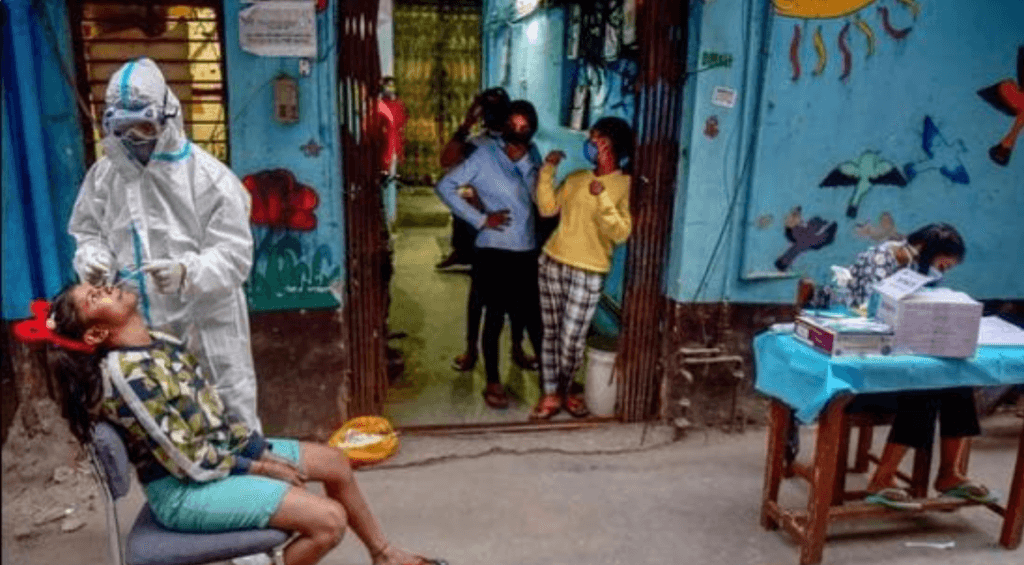
A Lancet report pointed out that over 1 million children lost a parent to Covid-19, including 1.1 lakh in India. The need of the hour is for the government to take a bottoms-up approach and work alongside the child protection system.”The government needs to create solid and multi-sectoral protocols to legally bind duty-bearers to support and protect orphaned or abandoned children, together with stakeholders such as family and community members, the panchayati raj institutes, and child protection structures. The Integrated Child Protection Scheme officials can be the core team to synergise different efforts across districts,” shares Neelima Makhijani, Country Director, Child Fund India.
13. A Lost Childhood To Child Labour

“What does it mean to lose one’s childhood to unsung labour? What is it like when books are replaced by bricks, playgrounds by agricultural fields, plastic toys with heavy-metal machines, alphabet recitations by silent cries of help? What is to have memories set in strife, solemn smiles, and tiny hands clasped in the chains of unquestioned slavery?” Nobody knows. Because 160 million children worldwide, deep into an abyss of darkness and trauma, do not get to answer these questions.
A report published in June by the International Labour Organization and UNICEF shows an increase of more than 8 million child labourers across the domain in the past four years, and over 9 million more children are expected to have lost their childhood by 2022.”
14. Providing A Safe Space For Children To Heal

Now more than ever, children require a nurturing environment to heal from the impact of Covid-19. “Just because children don’t have jobs or bosses, financial worries and deadlines don’t mean they’re not struggling with the ways the pandemic has affected us. In most homes, they become silent observers and sponges to the cascading impact of Covid-19. Several older children are developing a sense of purposelessness, and questioning their role in the world, one impacted by climate change, rampaging illness, economic loss, and political divisiveness, shares Gayatri Jayaraman, a mind-body, spirit therapist in this article.
15. The Layered Impact Of The Pandemic On Children As Young As Three

While the pandemic has impacted older children and adults, for toddlers, this is the only world that they have seen- a world where putting on a mask is the only reality. “Before the pandemic, the first few words that nursery and pre-school students picked up in school were silence, school bus, classroom, and playground. They have been replaced by coronavirus, immunity, isolation, lockdown, mask, sanitiser, pandemic, quarantine, and spread to name a few,” writes Tanu Kulkarni, in an article for the Hindu.
16. Answering Some Tough Questions Posed by Children During The Second Wave

How do orphans live? What if I get COVID-19? Will I Die? What will happen if Mom or Dad gets COVID-19? Is Grandpa going to die? When is the pandemic going to end? When can I meet my friends or go to school? Children asked some heartbreaking COVID-19 questions and here’s why and how one can answer the questions.
17. In A Child’s Voice: ‘Children in the Pandemic, Least Spoken, Most Affected’

“While adults have ventured out during various stages of un-lockdown, children have been strictly confined to their homes. This has led to the condition of children being more adversely affected than adults. Rather than in-person interaction with mentors and peers, children are left confined to their homes as they continue to drown in fear and anxiety,” shares Ishana Sharma, a grade 8 student of Cathedral and John Connon School, Mumbai.
18. Having The Grief Talk With Children Couldn’t Wait Any Longer

“There has been a collective loss and any talk with an individual child must sit within the larger context of everybody acknowledging this loss, rather than flexing muscles about beating the second wave,” shares Nicole Rangel, Co-founder, Leher in this article on why the grief talk is the most important talk to have with children amid the pandemic.
19. The Loss of Education and Recreation for Children from 0-5 years

Research shows that early childhood is a critical period for the growth and development of children and due to the pandemic,early childhood education was impacted. “While every educational institution in India shut down in March 2020 and most moved online to ensure continued learning during the pandemic, we have approximately 165 million children in the 0-5 years age group who have lost out on early childhood care and learning as centres dedicated to their development… remain closed,” a news story in the Indian Express.
20. The Rising Number Of Children With Disabilities
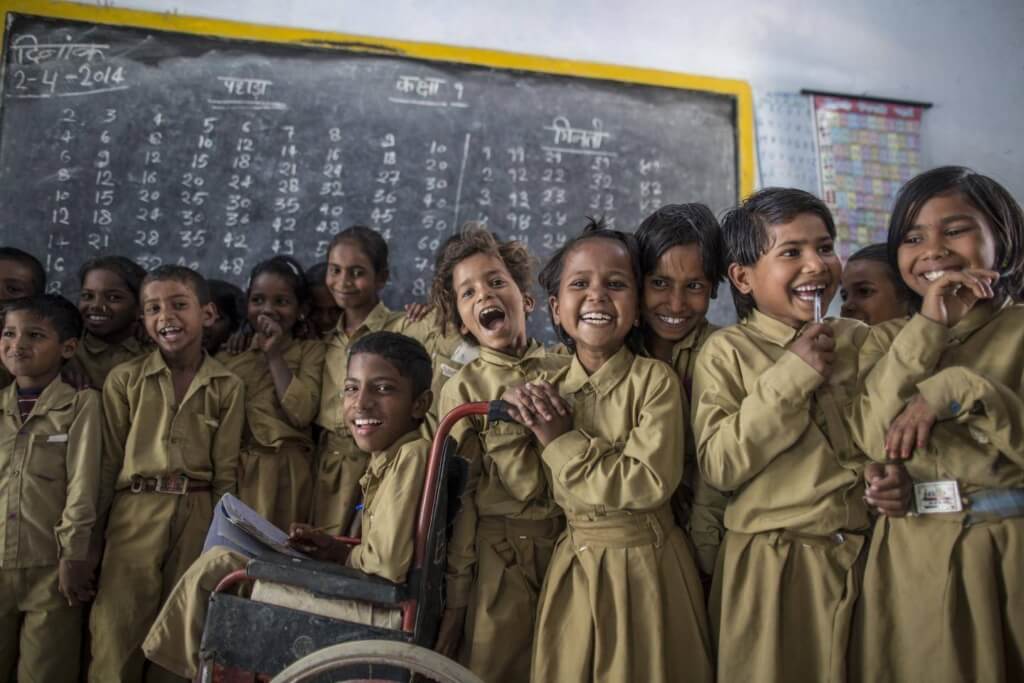
“Children with disabilities are 49% more likely to have never attended school, 47% more likely to be out of primary school, 33% more likely to be out of lower-secondary school and 27% more likely to be out of upper secondary school.
The UNICEF report includes comparable data from 42 countries and covers more than 60 indicators of child well-being – from nutrition and health, to access to water and sanitation, protection from violence and exploitation, and education.” To read the news report, click here.
21. The Ever-Increasing Inequalities On Dalit Children Must Stop

Time and again, we read stories of inequalities and violence caused on Dalit Children. In Gurgoan, a five-year-old Dalit girl was raped and killed, in Madhya Pradesh, two Dalit children were beaten to death for defecating in public. Children have to bear the brunt of the power dynamics, and it is about time we look at the causes of this rape culture, our culture of inflicting all sorts of violence against children who are less powerful.
These 21 stories from 2021 show how the pandemic has soon become a Child Rights Crisis impacting children and their childhoods. In 2022, let’s hope that we can work together to protect the rights of children.